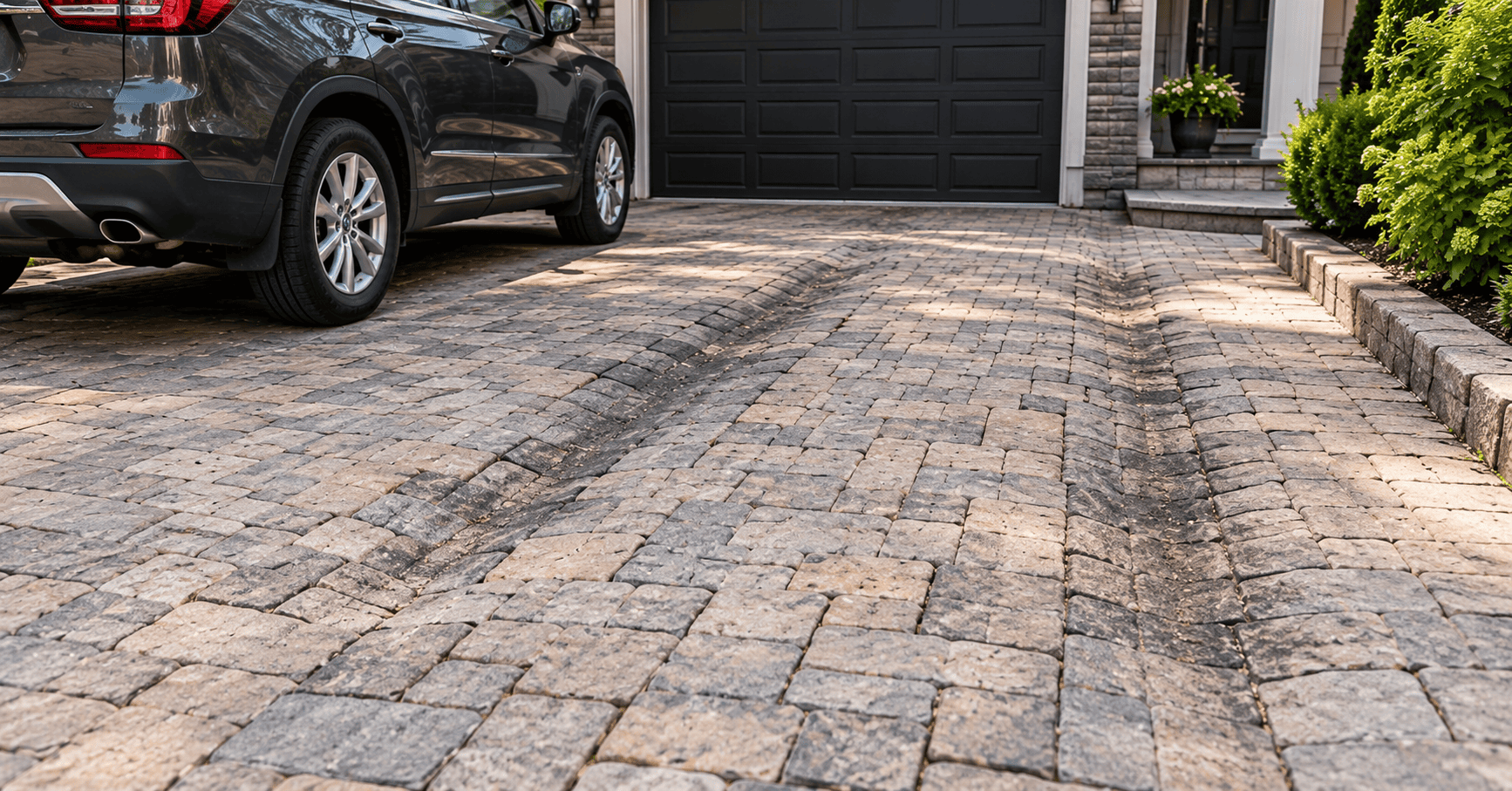
Have you noticed two sunken tracks forming where your car regularly drives or parks? These depressions, known as tire ruts, can make an otherwise attractive paver driveway look uneven. Over time, they may become deeper, collect rainwater, and cause nearby pavers to shift.
The problem usually isn’t the pavers themselves. In many cases, the materials beneath them have started settling under repeated vehicle weight. Understanding what causes this movement can help NYC homeowners choose the right repair instead of paying for a temporary fix.
Why Do Tire Ruts Form in Paver Driveways?
A properly installed paver driveway has several layers working together to support vehicle traffic. The pavers form the visible surface, while the compacted aggregate base and underlying soil provide structural support.
When these layers aren’t prepared correctly, the weight of vehicles can gradually create depressions along the wheel paths.
Several conditions can contribute to this problem:
- Poor base compaction: If the crushed stone beneath the pavers wasn’t compacted properly, it can settle under repeated vehicle loads.
- Unstable soil: Soft soil or old construction fill may shift even when the paving surface was initially level.
- Drainage problems: Water entering the foundation can weaken the supporting soil and contribute to settlement.
- Excess bedding sand: A bedding layer that’s too thick or uneven may compress beneath vehicle traffic.
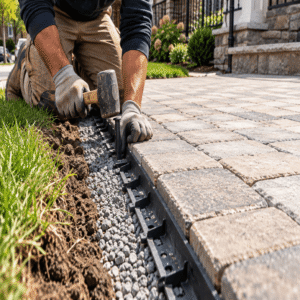
- Weak edge restraints: When pavers aren’t properly contained along the driveway edges, they can spread and lose stability.
Sometimes, more than one issue is responsible. For example, poor drainage can soften the soil beneath an already weak base, causing the wheel tracks to sink faster.
The type of pavers also matters. Driveways need paving units suitable for vehicle traffic, along with an installation pattern and foundation designed to handle driving, parking, and turning forces.
Why Are Some NYC Paver Driveways More Vulnerable?
Driveways in Brooklyn, Queens, Manhattan, and Staten Island can face conditions that make settlement more complicated.
Many older NYC properties have soil that has been disturbed by previous construction, utility installations, or driveway replacements. When different sections of the ground have different levels of compaction, one area may settle while the rest of the driveway remains stable.
Drainage can also be challenging, especially on narrow properties where driveways connect directly to sidewalks, garages, or street entrances. If rainwater repeatedly collects along the wheel paths, it can gradually weaken the supporting materials.
Research suggests that increasing axle loads from 22,000 to 50,000 lb can increase pavement rut depth by over 50%, highlighting the impact of heavy vehicles.
Winter weather adds another concern. Water trapped in susceptible soil can contribute to frost movement during freezing temperatures, followed by settlement as conditions change.
These factors don’t mean paver driveways are unsuitable for NYC homes. They simply make proper foundation preparation and drainage especially important.
You May Like to Read
- Paver Steps Brooklyn NY | Safer Row Home Entry Ideas
- Driveway Apron Pavers in NYC: Costs, Permits & Options
- Paver Sealing Cost in NYC: When Is It Worth Paying For?
How Can Tire Ruts in a Paver Driveway Be Fixed?
The right repair depends on how much of the driveway has settled and what’s happening beneath the surface.
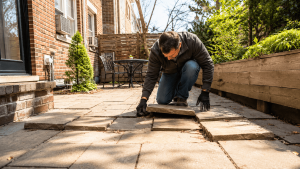
If only a small section is affected, a contractor may be able to lift the existing pavers, correct the foundation, and reinstall the same units. This is one advantage of interlocking pavers: undamaged pieces can often be reused rather than replaced.
However, resetting the pavers without addressing the underlying problem may allow the ruts to return.
A typical repair involves:
- Removing the affected pavers to inspect the bedding and foundation.
- Repairing unstable materials by replacing failed base material or addressing weak soil where necessary.
- Correcting drainage problems that contribute to water accumulation.
- Reinstalling and leveling the pavers with appropriate bedding, compaction, joint filling, and edge support.
For example, if wheel tracks have developed because the base was poorly compacted, simply adding more bedding sand won’t restore the foundation’s strength. The affected base needs to be corrected before the surface is rebuilt.
If settlement extends across most of the driveway, a larger reconstruction may be more practical than repeated spot repairs.
The goal isn’t just to make the driveway look level again. It’s to create a stable surface that can withstand everyday vehicle use.
How to Prevent Tire Ruts From Coming Back
A long-lasting paver driveway starts with the right foundation. Before installation, the contractor should evaluate the soil conditions, expected vehicle loads, drainage, and appropriate base construction.
For an existing driveway, paying attention to early warning signs can help prevent further deterioration. Widening joints, slight surface depressions, shifting edge pavers, and standing water may indicate that the driveway needs attention.
Regular maintenance also matters. Keeping drainage areas clear and replacing missing joint material when appropriate can help maintain the paving system. However, maintenance alone cannot correct an unstable base.
If you’re planning a new driveway, ask your contractor how the foundation will be prepared and how water will drain away from the paved surface. These details are just as important as choosing the color or style of the pavers.
Final Thoughts
Tire ruts in paver driveways often develop because the foundation beneath the surface cannot adequately support repeated vehicle traffic. Poor compaction, unstable soil, and drainage problems are among the most common contributing factors.
The right solution depends on identifying the cause. Some driveways need only localized repairs, while others require more extensive foundation work.
If your driveway has developed sunken wheel tracks or uneven pavers, NY Pavers can help you explore suitable repair or replacement options for your NYC property.
Contact NY Pavers to discuss your driveway project and request an estimate.