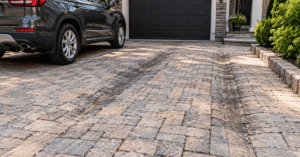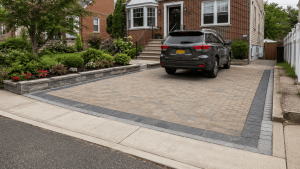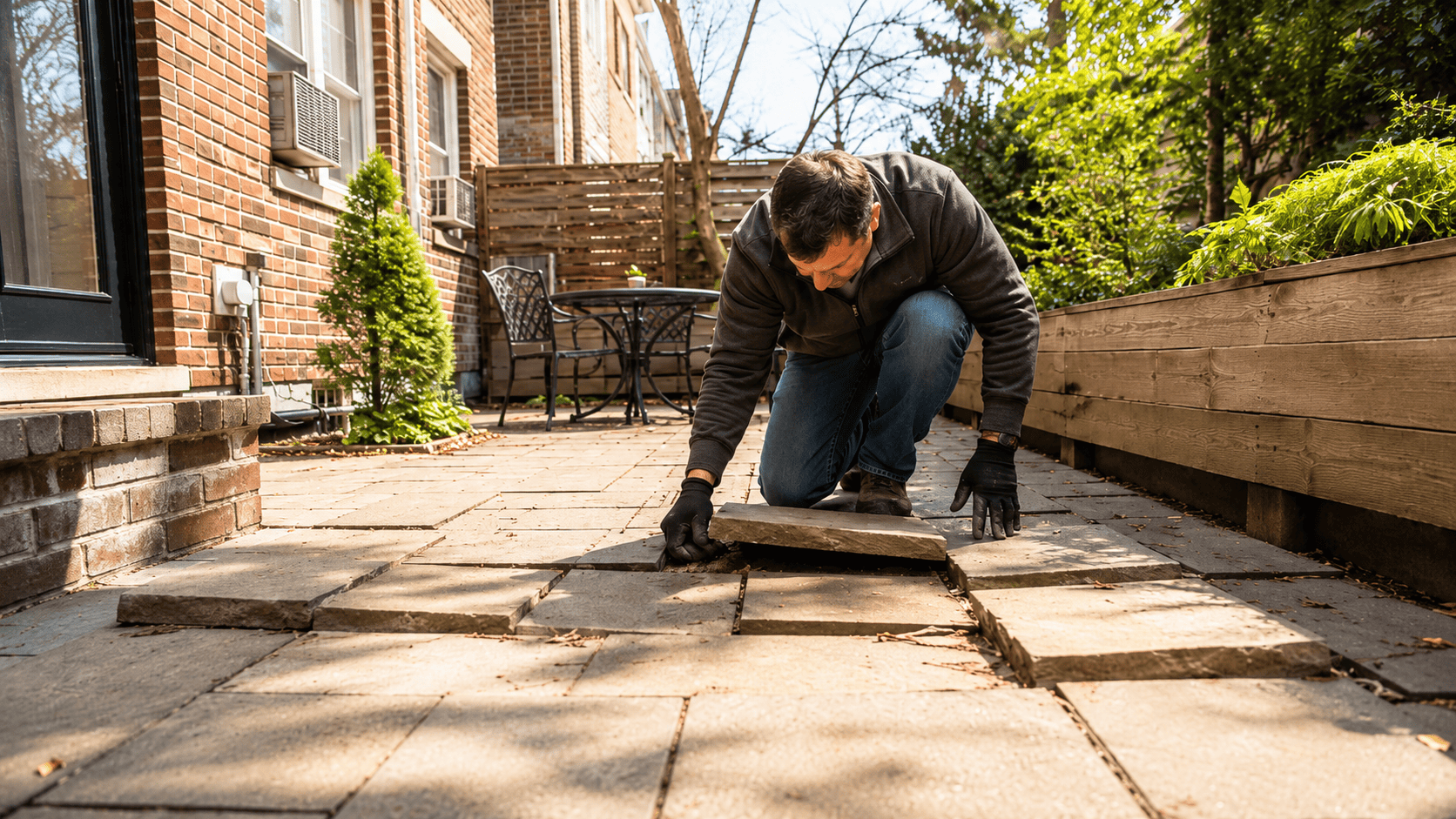
Raised patio pavers in NYC are often a sign that something underneath the surface has changed. What you notice might be a rocking paver, a corner sitting higher than the rest, or a section where rainwater suddenly starts pooling. While it is easy to blame the pavers themselves, the real issue often starts with the base below.
What you notice might be a paver that rocks when you step on it, a corner that’s a little higher than the rest, or a section where rainwater suddenly starts pooling. It’s easy to blame the pavers themselves, but they’re often just showing you that something underneath has changed.
That’s the part many homeowners never see.
A patio is only as strong as the foundation beneath it. When that foundation begins to fail, the pavers move with it. Replacing a few loose stones may improve the appearance for a while, but if the base is no longer doing its job, the problem usually comes back.
Understanding what’s happening below the surface can save you from making the same repair twice.
Why Do Patio Pavers Become Raised?
People often assume pavers lift because they’re getting old. Raised patio pavers in NYC usually happen when water, soil movement, tree roots, freeze-thaw cycles, or poor compaction pushes the surface out of level.
Age plays a role, but it’s rarely the entire story.
In most cases, something underneath has shifted, expanded, or lost its stability. The pavers simply follow that movement.
Several things can cause this to happen:
- Water washes away part of the base.
- Freeze-thaw cycles expand the ground during winter.
- Tree roots growing beneath the patio.
- Soil settles over time.
- A base that wasn’t compacted properly during installation.
Each of these creates pressure beneath the surface, and eventually the patio starts losing its level appearance.
The Base Is Doing More Work Than You Think
When people picture a patio, they usually think about the pavers they can see.
The real strength comes from everything underneath them.
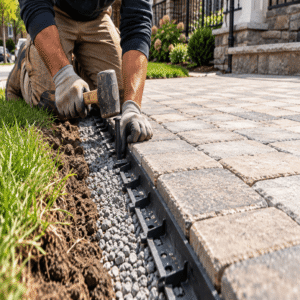
A properly built patio includes layers of compacted aggregate that spread weight evenly across the ground. That foundation prevents individual pavers from sinking, shifting, or lifting every time the weather changes.
If those layers weren’t installed correctly, or if years of moisture have weakened them, the surface begins reacting to every season.
The pavers aren’t failing.
The support underneath them is.
How Can You Tell the Base Is the Problem?
Not every raised paver means the entire patio needs rebuilding.
Sometimes only a small area has been affected.
There are a few signs that often point to base problems instead of surface wear:
- Multiple pavers have lifted together instead of just one.
- The raised section continues getting larger each year.
- Rainwater sits in unexpected places.
- Some pavers feel loose while others remain solid.
- The patio no longer looks level when viewed from a distance.
These symptoms usually suggest movement beneath the surface rather than damage to the pavers themselves.
Why Simply Hammering the Pavers Back Down Doesn’t Work
It sounds like an easy solution.
If the pavers are sticking up, why not tap them back into place?
Unfortunately, that’s only treating the symptom.
If the foundation underneath has shifted, the pressure causing the movement is still there. The pavers may sit flat for a short time, but they often begin lifting again because nothing underneath has changed.
Lasting repairs almost always begin below the visible surface.
Water Is Often the Hidden Cause
Water has a way of finding every weak spot.
When drainage isn’t working properly, moisture seeps into the base beneath the patio. Over time, flowing water can wash away fine materials that help keep the foundation compact.
During winter, that same moisture freezes, expands, and places additional pressure on the patio from below.
The result isn’t always immediate.
Sometimes years pass before homeowners notice the first raised section.
Tree Roots Aren’t Always to Blame
Whenever patio pavers start lifting, nearby trees usually get the blame.
Sometimes that’s fair.
Large roots can certainly push upward as they grow.
But many raised patios have no trees nearby at all.
In those cases, the issue is often poor drainage, settling soil, or a base that wasn’t compacted enough during the original installation.
That’s why guessing rarely works. The cause needs to be identified before deciding how to repair it.
Does the Whole Patio Need to Be Rebuilt?
Thankfully, not always.
One advantage of pavers is that individual sections can often be repaired without replacing the entire patio.
If the damage is limited, contractors may remove only the affected area, rebuild the base correctly, and reinstall the existing pavers.
When the entire foundation has become unstable, however, a larger reconstruction may be the smarter long-term investment.
The right decision depends on how widespread the movement has become.
Why This Happens in NYC Backyards
Backyards across New York don’t all sit on the same type of ground.
Some properties have older fill soil from previous construction. Others experience drainage challenges because of tightly packed lots or neighboring properties that direct water toward the yard.
Then there are the city’s changing seasons.
Winter freezes the ground. Spring brings melting snow and heavy rain. Summer dries everything out before autumn starts the cycle again.
Those constant changes place stress on patios year after year.
A strong base is what allows the pavers to handle that movement without becoming uneven.
Waiting Usually Makes Repairs Bigger
A raised corner of the patio may not seem urgent.
Many homeowners decide they’ll deal with it next season.
The problem is that movement rarely stays in one place.
As the base continues shifting, nearby pavers begin losing support too. Water starts entering larger gaps, making future movement even more likely.
What could have been a relatively small repair often grows into a much larger project simply because it was left alone for too long.
A Level Patio Starts Below the Surface
It’s easy to focus on the pavers because that’s what you see every day. NY Pavers can inspect raised patio pavers in NYC and determine whether the problem comes from drainage, soil settlement, base failure, or another hidden cause.
But a beautiful patio isn’t created by the pavers alone. It’s created by a stable foundation that continues supporting them through rain, freezing temperatures, summer heat, and years of daily use.
At NY Pavers, we don’t just replace raised pavers and hope for the best. We take the time to understand why they moved in the first place. Whether the issue is a weakened base, drainage problems, soil settlement, or another hidden cause, the goal is the same: build a repair that lasts instead of one that simply looks good for a few months.