Front steps on Brooklyn row homes take a lot of daily abuse. They deal with foot traffic, winter salt, rain, snow, freeze-thaw movement, old patching, and decades of wear. By the time many homeowners start thinking about replacing their steps, the damage is already visible: cracked treads, loose mortar, uneven risers, surface spalling, or steps pulling away from the building.
For Brooklyn properties, rebuilding the entry steps is not only about appearance. A safer, better-built front entry can improve curb appeal, reduce trip hazards, and make the home feel more finished from the street. The right material choice also matters because Brooklyn row homes often have older brick, brownstone, limestone, or concrete façades that need a step design that looks natural with the property.
Below are the most practical paver, bluestone, and masonry step ideas for Brooklyn row homes, along with safety details, material options, cost factors, and installation issues homeowners should understand before hiring a contractor.
Why Brooklyn Row Home Steps Fail
Most front step problems start slowly. Small cracks allow water to enter the concrete, mortar joints, or old patches. When temperatures drop, that trapped water freezes and expands. Over time, the cracks grow wider, the surface begins to break apart, and the step structure becomes weaker.
Older Brooklyn row homes often have another issue: the base below the steps may no longer be stable. Many older entries were built decades ago, and years of soil movement, water exposure, and repeated repair work can cause the steps to settle unevenly. When the base moves, the surface material eventually follows.
Deicing salt also plays a role. Front steps often receive more salt than other exterior surfaces because homeowners want to keep the entry safe in winter. While salt helps with ice, it can speed up surface damage on older concrete and weaken deteriorated mortar joints.
Patching can help in some cases, but repeated patching is usually not a long-term fix. When new repair material is placed over weak concrete or a failing base, the new surface may crack again within a short time. That is why many Brooklyn row home step projects require a deeper rebuild instead of another surface patch.
Best Material Options for Brooklyn Front Steps
The best material depends on the home’s façade, budget, safety needs, and the condition of the existing structure. For most Brooklyn row houses, the goal is to choose a material that looks appropriate, handles freeze-thaw weather, and provides a safe walking surface.
Bluestone Treads
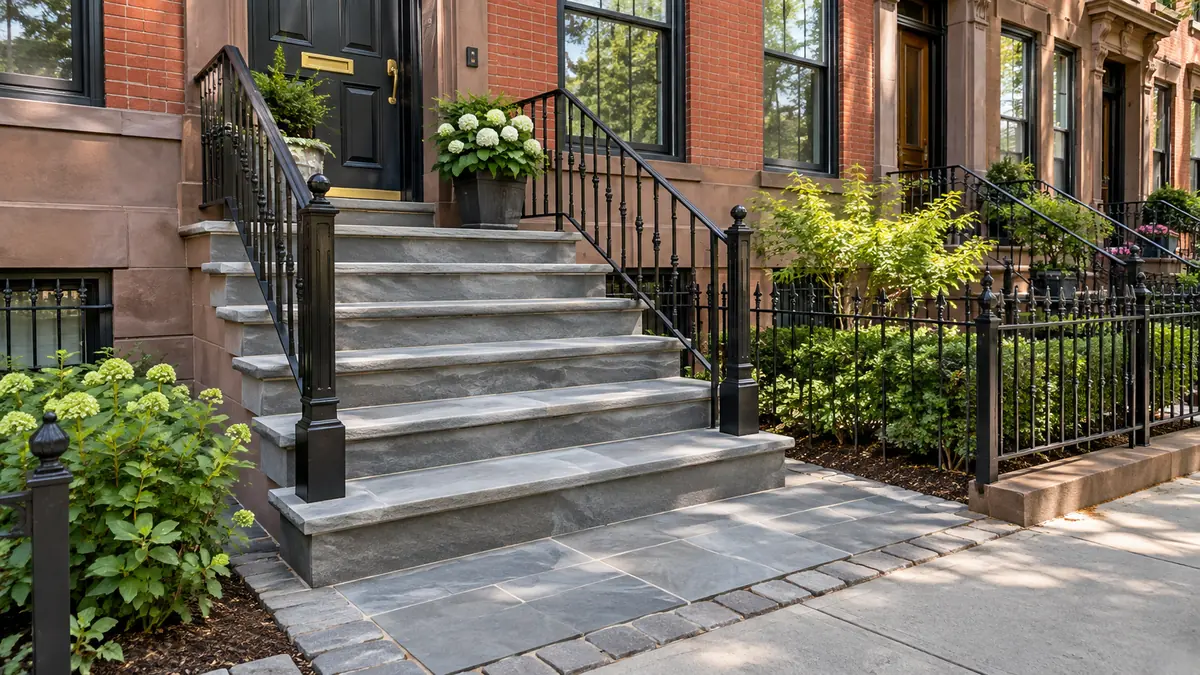
Bluestone is one of the most popular choices for Brooklyn row home steps. It has been used on NYC stoops, walkways, and front entries for generations, so it fits naturally with brick and brownstone-style homes.
Bluestone treads are typically installed over a properly prepared concrete or masonry substructure. The result is a clean, durable step surface with a classic appearance.
Natural cleft bluestone has a textured surface, which can provide better traction than very smooth stone. Thermal bluestone has a cleaner, more modern appearance, but it can feel smoother depending on finish and weather conditions. For many front entries, natural cleft bluestone is a practical choice because it balances appearance and grip.
For budgeting, bluestone tread costs can vary based on width, thickness, access, demolition, base repair, and installation detail. A rough material-and-installation discussion should always happen after the contractor inspects the existing steps.
Concrete Paver Steps
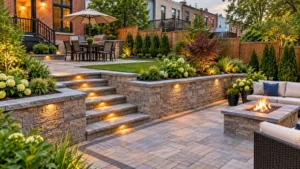
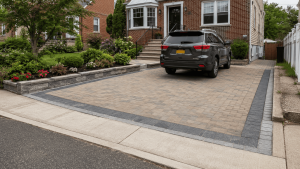
Concrete paver steps are another strong option for Brooklyn homes. They can be built using paver units and wall/block systems to create the risers, treads, and side details. This option can work well when the homeowner wants a more patterned or modern entry.
Paver steps can be designed to match a new walkway, driveway border, patio area, or front yard hardscape. They also come in different colors and textures, making it easier to pair them with brick homes, stucco homes, and mixed-material façades.
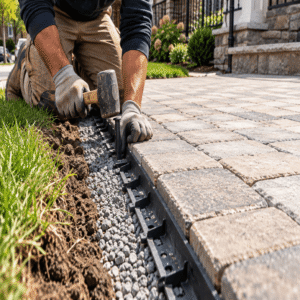
The key is proper installation. Paver steps need a stable foundation, correct drainage, and secure edge or wall support. If the base is weak, even good pavers can shift over time.
Belgian Block with Bluestone Treads
For older Brooklyn row homes, Belgian block risers with bluestone treads can create a strong traditional look. The rough stone texture of Belgian block pairs well with old brick, brownstone, and classic Brooklyn exterior details.
This combination works especially well when the goal is to make the front entry feel permanent, substantial, and connected to the original architecture of the home.
Precast Concrete Steps
Precast concrete steps can be a lower-cost replacement option in some cases. They are simple and sturdy, but they offer less design flexibility than bluestone, paver, or custom masonry step systems.
Precast may be useful when budget is the main concern, but it may not always be the best visual match for older Brooklyn row homes.
Safety Details Matter More Than Appearance
Front steps are not only decorative. They are part of the daily entrance to the home, which means safety should be considered from the start.
One common issue is uneven riser height. Older steps often become inconsistent after years of patching and repairs. One riser may be slightly higher than the next, or the landing may no longer align properly with the walkway. These differences can create a trip hazard.
A proper rebuild should aim for consistent riser heights and comfortable tread depth. The exact design should be based on the property, entry height, and applicable code requirements.
Surface texture also matters. Smooth stone or worn concrete can become slippery when wet. Textured bluestone, textured concrete pavers, and properly selected masonry materials can help provide better traction for an exterior entry.
Drainage is another major safety detail. If the steps pitch toward the door instead of away from it, water can collect near the entry and freeze in winter. A properly built step system should help move water away from the doorway and off the walking surface.
Handrails should also be evaluated during the project. If the existing rail is loose, outdated, poorly anchored, or no longer aligned with the new steps, the rebuild is the right time to address it. Planning the rail location early helps avoid weak anchors or awkward drilling after the new steps are finished.
The Base Is Usually the Difference Between a Short-Term Fix and a Long-Term Rebuild
Many step failures are blamed on the surface material, but the real problem is often underneath.
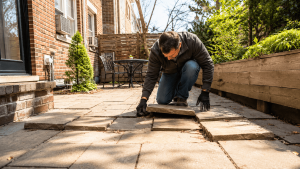
A proper step rebuild may require removing loose or failed material, exposing the existing base, checking for settlement, and rebuilding the foundation or substructure where needed. The new step system needs stable support before the finished treads or pavers are installed.
This is the part of the job homeowners do not see after completion, but it is one of the most important parts of the project. A beautiful bluestone tread or paver surface will not last if it is installed over weak fill, broken concrete, or a settling base.
Before hiring a contractor, ask one simple question:
What foundation or base are you building under the new steps?
The answer will tell you a lot about the quality of the work. A serious contractor should be able to explain the base preparation, drainage approach, material choice, and how the steps will be supported.
Should You Replace the Walkway at the Same Time?
For many Brooklyn row homes, step replacement works best when the front walkway or landing is updated at the same time.
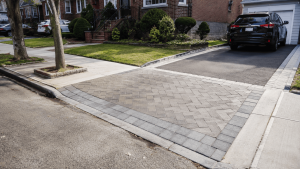
If the steps are replaced but the old cracked walkway remains, the entry can still look unfinished. The same problem happens when the walkway is new but the steps are still damaged or patched. Replacing both together creates a cleaner and more complete entry.
This also gives the contractor a chance to manage the transition between the sidewalk, walkway, landing, and steps. When the materials match or complement each other, the whole entry looks intentional instead of pieced together.
Good combinations include:
- Bluestone steps with a bluestone walkway
- Bluestone treads with concrete paver walkway
- Concrete paver steps with matching paver walkway
- Belgian block accents with natural stone treads
- Masonry step rebuild with upgraded front landing
The best choice depends on the style of the home and how the entry connects to the sidewalk, yard, or driveway.
Cost Factors for Brooklyn Paver and Stone Steps
The cost of replacing front steps in Brooklyn depends on more than the surface material. Two homes may have the same number of steps but very different pricing because the base, access, demolition, and layout are different.
Main cost factors include:
- Number of steps
- Width of each tread
- Material choice
- Condition of existing concrete or masonry
- Whether the base needs reconstruction
- Handrail removal or resetting
- Walkway or landing work
- Disposal and access conditions
- Drainage and pitch corrections
- Custom cuts, curves, or side walls
As a rough planning range, concrete paver steps are often more budget-friendly than natural stone. Bluestone treads usually cost more, but they provide a classic Brooklyn look and strong long-term curb appeal when installed correctly.
The most accurate price should come from an on-site estimate because front step conditions can vary heavily from one Brooklyn row home to another.
Why NY Pavers for Brooklyn Row Home Steps
NY Pavers has over 23 years of experience working on paver, stone, masonry, and exterior hardscape projects across New York City. For Brooklyn row homes, the goal is not just to make the steps look better. The goal is to build an entry that is safer, cleaner, properly supported, and better matched to the home.
Our team can help homeowners compare bluestone, concrete pavers, Belgian block, natural stone, and masonry step options based on the condition of the existing entry and the look of the property.
Every step project starts with a proper inspection of the existing structure, base condition, drainage, riser layout, and surrounding walkway or landing. From there, we recommend the material and installation approach that makes sense for the home.
If your Brooklyn front steps are cracked, uneven, loose, patched, or pulling away from the entry, it may be time to replace them properly instead of patching them again.
Call (718) 838-0982 or visit nypavers.com to schedule a free Brooklyn step estimate.