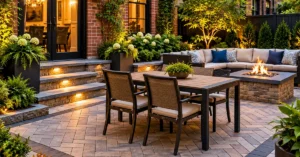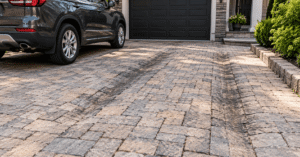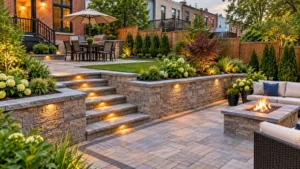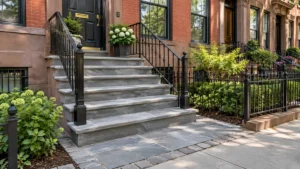
Choosing the right paver colors for brick homes can completely change how a Brooklyn property looks from the street or backyard. The right shade can complement the existing brick, highlight architectural details, and give a patio or walkway a clean, coordinated finish.
But Brooklyn brick homes don’t all look alike. A red-brick row house in Bay Ridge may need a different paver color from a weathered brownstone-style townhouse in Park Slope or a tan-brick property in Bensonhurst.
The challenge isn’t finding an attractive paver color. It’s finding one that works with your home’s brick, mortar, entry steps, windows, and surrounding landscape.
This guide compares the best paver colors for Brooklyn brick homes, explains which combinations work well, and shows how to choose a finish you’ll feel confident about before installation begins.
Quick Answer: What Paver Colors Look Best With Brick Homes?
Warm gray, charcoal, tan, sandstone, and blended earth tones are among the most versatile paver colors for Brooklyn brick homes. The best choice depends on the brick’s undertone, the amount of natural light, and whether you want the paving to blend with the house or create contrast.
For a quick comparison:
| Brick Home Color | Paver Colors to Consider | Overall Look |
|---|---|---|
| Traditional red brick | Warm gray, tan, charcoal | Classic or modern |
| Dark reddish-brown brick | Sandstone, taupe, medium gray | Warm and balanced |
| Weathered gray-brown brick | Blue-gray, medium gray, muted beige | Refined and coordinated |
| Buff or tan brick | Sand, taupe, charcoal | Soft or high contrast |
| Mixed-color brick | Neutral blended gray or brown | Natural and cohesive |
These are starting points rather than fixed rules. Always compare actual paver samples against the building before deciding.
Planning a patio or walkway for your Brooklyn brick home? NY Pavers provides professional paver installation with material, layout, and color selection guidance. Request a free estimate to explore options for your property.
Start With Your Brick Color, Not the Paver Catalog
One of the easiest mistakes homeowners make is choosing a paver because it looks attractive in a catalog or online photograph.
A beautiful charcoal patio in one backyard may look too dark beside another building. A light beige paver that looks elegant in a showroom may appear washed out against weathered brick.
Instead, start by studying your home’s existing exterior.
Look at the brick’s dominant color, its undertones, and the surrounding details.
For example, two red-brick houses may have different appearances. One may contain orange and warm brown tones, while another has cooler, darker red brick with gray mortar.
Those differences can change which paver colors look most natural.
Pay attention to the mortar joints, front steps, window frames, doors, and existing stonework. These details provide useful color references.
A charcoal paver may coordinate with black railings and window frames, while a warm gray paver may connect better with light stone steps or gray mortar.
The goal isn’t to match every material. It’s to create a balanced combination.
1. Best Paver Colors for Red Brick Homes
Red brick is common across Brooklyn’s residential architecture, from traditional row houses to detached homes and multifamily properties.
It provides a warm exterior that works with several paver color families.
Warm Gray: The Most Versatile Option
Warm gray pavers offer a balanced contrast against reddish brick.
They introduce a neutral ground surface without making the patio or walkway feel disconnected from the house.
Warm gray also works with black metal railings, stone steps, concrete borders, and many outdoor furniture colors.
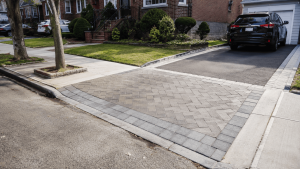
For a Brooklyn front walkway, medium warm-gray pavers with a darker border can create a clean entry without competing with the brick façade.
Tan and Sandstone: A Softer Traditional Look
Tan and sandstone colors pick up the warm undertones in red brick.
This combination can feel especially natural when a property has cream-colored mortar, beige stone details, or warm-toned steps.
A subtle tan-gray blend can work better than a completely uniform beige because it introduces variation without overwhelming the surface.
Charcoal: A Modern Contrast
Charcoal or graphite pavers create stronger contrast against red brick.
This combination can suit renovated row houses with black doors, contemporary windows, and simple metal railings.
However, charcoal should complement the whole property rather than stand out as an unrelated dark surface.
For a small front entry, consider using charcoal as a border with medium-gray field pavers instead of covering the entire surface with the darkest shade.
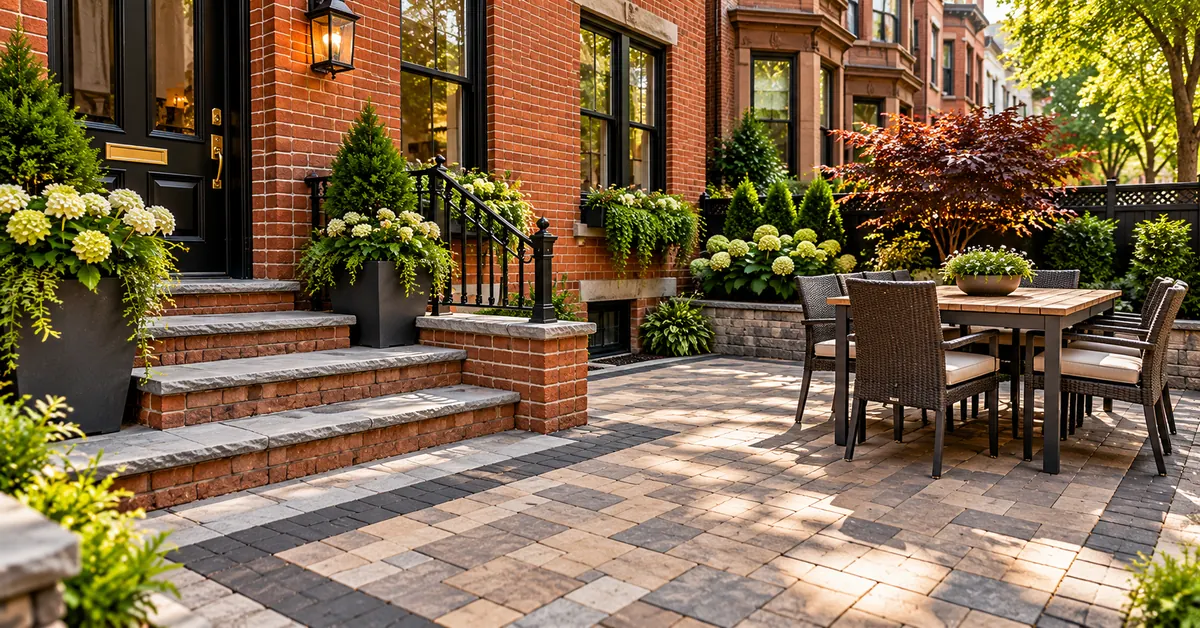
Design idea: For a traditional red-brick row home in Bay Ridge, consider warm-gray pavers, a narrow charcoal border, and a simple running-bond pattern. The combination can emphasize the entry without making it overly decorative.
2. Best Paver Colors for Gray-Brown and Weathered Brick
Older Brooklyn buildings often have brick surfaces with years of weathering, repairs, and natural color variation.
Some façades combine brown, charcoal, muted red, and gray tones within the same wall.
These surfaces can look especially attractive with understated paver colors.
Blue-Gray and Medium Gray
Medium-gray and muted blue-gray pavers can complement cooler masonry tones.
They create a coordinated appearance while leaving enough contrast between the vertical brick wall and horizontal paving surface.
For a traditional Brooklyn courtyard, gray pavers paired with dark metal fencing and green landscaping can create a refined, restrained design.
Taupe and Muted Sandstone
Homeowners who want a warmer appearance can consider taupe or soft sandstone.
These colors introduce warmth without requiring a dramatic contrast.
The combination can work well in shaded backyards where an entirely dark paving surface may make the area feel visually heavy.
Avoid Matching the Brick Too Closely
An exact brick-to-paver match isn’t always desirable.
If the walkway or patio closely matches every tone of the house, the surfaces can visually merge.
A slight difference in shade, brightness, or texture often creates better definition.
For example, choose medium-gray pavers beside darker gray-brown brick rather than searching for an identical brown-gray shade.
3. Best Paver Colors for Tan and Buff Brick Homes
Tan and buff brick can give a property a lighter, softer appearance than traditional red brick.
These façades can work with neutral, earthy, and contrasting paver colors.
Sand and light taupe create a coordinated look, particularly when the home has light stone trim or warm-colored mortar.
Medium gray adds contrast without appearing too dark. It can also connect with gray steps, fencing, or other hardscape elements.
Charcoal offers a contemporary look, especially when the property already has dark architectural accents.
For smaller walkways, consider keeping most of the surface a neutral medium tone and reserving darker colors for borders.
This approach creates definition without relying on several competing colors.
Should You Match or Contrast Your Paver Colors?
This is one of the most important design decisions.
There isn’t one correct approach for every Brooklyn property.
A matching color scheme creates a quieter, more cohesive appearance. A contrasting scheme draws attention to the paving and can emphasize the home’s architectural details.
Consider the result you want:
| Your Design Goal | Recommended Approach |
|---|---|
| Traditional and understated | Warm gray, tan, or blended neutral pavers |
| Contemporary entrance | Medium-gray pavers with charcoal accents |
| Brighter small backyard | Light-to-medium pavers with subtle variation |
| Strong curb appeal | Complementary field pavers with a contrasting border |
| Natural garden appearance | Earth-toned blends and textured finishes |
For most residential projects, a restrained palette works well.
Choose one main paving color and, if appropriate, one accent color.
Too many contrasting shades can make a small Brooklyn patio or walkway feel crowded.
You can also review Techo-Bloc’s paver color options to explore different combinations of paving colors and textures.
How Paver Borders Change the Appearance of Brick Homes
A paver border can make a simple design look more intentional.
Instead of covering an entire walkway with dark pavers, you can use a darker border to frame a lighter field.
For example, warm-gray pavers with a charcoal border can complement a red-brick façade while providing a clear edge to the walkway.
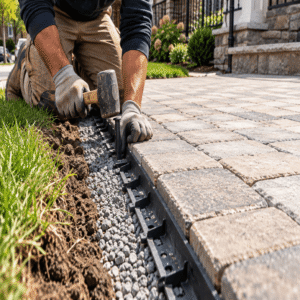
Belgian block offers another option. Its stone texture can coordinate with older brickwork, natural stone steps, and traditional masonry details.
For smaller Brooklyn front yards, a narrow border often makes more sense than a wide decorative band.
Keep the border proportionate to the space.
A walkway shouldn’t lose too much of its visual width because the border takes up most of the design.
The paving pattern also matters. Running bond offers a straightforward traditional look, while herringbone introduces more movement and visual detail.
Choosing colors and patterns together often produces a more cohesive result than deciding on each separately.
How to Choose Paver Colors for a Small Brooklyn Backyard
Brooklyn backyards often receive uneven sunlight because neighboring buildings, fences, and trees block portions of the sky.
This can noticeably change how paver colors appear throughout the day.
A medium-gray paver may look bright in direct sun but darker and cooler near a shaded rear wall.
For compact patios, consider these practical design choices.
Use Subtle Color Blends
A soft mix of gray, taupe, or sandstone shades can add visual depth without creating distracting contrasts.
Blended pavers can also help connect a new surface with a brick façade that already contains natural variation.
Keep the Design Simple
For a small backyard, avoid introducing too many paving colors, decorative bands, and complex patterns at once.
A clean layout can make it easier to organize furniture, planters, and access routes.
Think About Everyday Use
The patio needs to work as well as it looks.
Consider outdoor dining, furniture placement, grilling, access to the rear door, drainage, and maintenance.
Paver color should support the overall design rather than become the only deciding factor.
For homeowners planning a complete backyard upgrade, NY Pavers offers paver patio installation in NYC with attention to material selection, base preparation, grading, and drainage.
Test Paver Colors Before Making Your Final Decision
Never choose a paver color from a digital photograph alone.
Screen settings, photography, lighting, and surrounding materials can change how a color appears.
Before finalizing your selection, request physical samples or review a representative installed display.
Compare the samples directly beside the brick and near the intended installation area.
Check the Colors in Different Lighting
Look at the samples during normal daylight and under the property’s typical shaded conditions.
A color that looks ideal in bright sunlight may appear cooler or darker in a narrow Brooklyn backyard.
Compare Dry and Wet Pavers
Water can temporarily darken many paving materials and make their tones appear richer.
Compare the samples dry and wet so you understand both appearances.
For more guidance, Unilock recommends reviewing physical paver samples in natural light rather than relying only on photographs.
Look at the Entire Exterior
A sample should work with more than the brick.
Compare it with existing steps, door colors, fences, masonry, and landscaping.
This gives you a better understanding of how the finished patio or walkway may look.
Which Paver Colors Are Easiest to Maintain?
Color affects how visible certain marks appear, but the paver’s material, finish, surface density, and exposure also matter.
Light-colored pavers may show dark dirt, leaf stains, and some organic marks more clearly.
Very dark pavers may make pale dust or white mineral deposits more noticeable.
Medium-tone blended pavers often provide a practical balance because subtle variation can reduce the contrast between everyday debris and the surface.
However, no color prevents staining.
What About Efflorescence?
Efflorescence is the white or light-colored mineral residue that can appear on concrete and other masonry materials.
It may stand out more against charcoal or other dark pavers.
The deposit does not automatically mean the pavers have failed. It is often an aesthetic issue associated with moisture movement and soluble salts.
For a detailed explanation, see Unilock’s guide to efflorescence on pavers.
Regular maintenance, suitable cleaning products, and good drainage help preserve the appearance of outdoor paving.
Never apply a sealer simply to darken the pavers without checking the manufacturer’s recommendations and testing the result first.
How Much Does Paver Color Affect Installation Cost?
Color alone may not determine the price of a paver project.
However, some colors, finishes, product collections, and special-order materials may cost more than standard options.
The overall installation price also depends on the surface area, existing pavement removal, base preparation, drainage, access, pattern complexity, and border details.
A small Brooklyn backyard with limited access may require more material handling and preparation than an open residential yard.
Before accepting an estimate, ask whether your selected paver color affects material availability, delivery, replacement options, or lead time.
Also discuss the availability of matching pavers if the patio needs an extension or repair later. Manufacturing variations can make an exact match difficult.
Want to compare paver colors and installation options for your Brooklyn property? Request a free estimate from NY Pavers and tell us about your brick color, project dimensions, and preferred design.
Why Choose NY Pavers for Brooklyn Paver Installation?
NY Pavers brings more than 23 years of experience in paving, masonry, and outdoor surface installation across New York City.
We work with concrete pavers, porcelain pavers, bluestone, and natural stone for patios, walkways, driveways, courtyards, and residential entrances.
For Brooklyn brick homes, choosing the right paving material involves more than finding a matching shade.
Our team can review the existing surface, property layout, surrounding masonry, drainage, intended use, and your design preferences before recommending suitable installation options.
Whether you want a traditional warm-gray walkway, a modern charcoal-accented patio, or a natural earth-tone design, the goal is to create a finished surface that complements your home and works for everyday use.
NY Pavers serves Brooklyn, Queens, Manhattan, and Staten Island.
Ready to Upgrade Your Brick Home’s Patio or Walkway?
The right paver color can help create a more coordinated exterior, but professional installation determines how well the finished surface performs.
Tell us about your Brooklyn property, the color of your existing brick, and the outdoor area you want to improve.
Call (718) 838-0982 or request your free on-site estimate.
Frequently Asked Questions
What color pavers look best with red brick houses?
Warm gray, tan, sandstone, taupe, and charcoal can all complement red brick. Warm gray offers a balanced look, while charcoal creates stronger contrast. The best choice depends on the brick’s undertones and surrounding architectural details.
Should pavers be lighter or darker than a brick house?
Either can work. Lighter pavers can create a softer, more open appearance, while darker pavers add definition. The important factor is how the colors work together rather than whether one surface is always lighter than the other.
Are gray pavers suitable for Brooklyn brick homes?
Yes. Gray pavers are versatile and can complement red, brown, tan, and weathered brick. Warm gray often suits reddish brick, while blue-gray can coordinate with cooler masonry tones.
What is the best paver color for a small Brooklyn backyard?
Medium-gray, warm taupe, sandstone, and subtle blended colors can work well in compact backyards. Choose a shade that complements the building and looks balanced under the property’s natural lighting conditions.
Do dark pavers show stains and efflorescence?
Dark pavers may conceal some dark marks but can make pale dust and white efflorescence more noticeable. Maintenance depends on the surface material, finish, weather exposure, and cleaning practices.
Can I combine two paver colors on a walkway or patio?
Yes. A common approach uses one main paving color and a contrasting border. For smaller areas, a simple two-tone design often looks more balanced than several competing shades.
How can I choose a paver color before installation?
Compare physical samples beside your home’s brick, check them under different lighting conditions, and examine how they look wet and dry. Review the samples alongside existing steps, doors, railings, and other masonry details.
Does NY Pavers provide free estimates in Brooklyn?
Yes. NY Pavers offers free on-site estimates for suitable paver installation projects in Brooklyn. Call (718) 838-0982 or submit your project details through the website.