Paver repair in Queens is often needed when patios, walkways, or driveways start sinking, shifting, or becoming uneven.
One of the most common complaints NY Pavers hears from Queens homeowners is sinking, shifting, and uneven pavers. The good news is that contractors can fix most of these problems without a full reinstall if they catch them in time and identify the real cause.
Below, you’ll find each problem, what causes it, and how to fix it.
Sinking Pavers
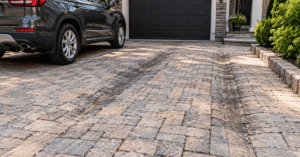
Appearance: One or more pavers, or sometimes a whole section, sits lower than the rest of the surface. Sometimes it looks like a small dip you barely notice. Other times it creates a low area that holds water after rain.
The cause: The problem always starts in the base layer under the pavers, not in the pavers themselves. Common causes include:
- Poor base compaction during installation. If the crew did not compact the gravel base in layers, it can keep settling for years.
- Insufficient base depth. Patios and walkways in Queens need at least 6 inches of compacted gravel base. Driveways need at least 8 inches. Shallow bases shift and settle over time.
- Water washing out the base material. Poor drainage often causes this, especially when downspouts discharge too close to the paved surface.
- Less often, tree roots or buried utilities near the area can cause localized settlement.
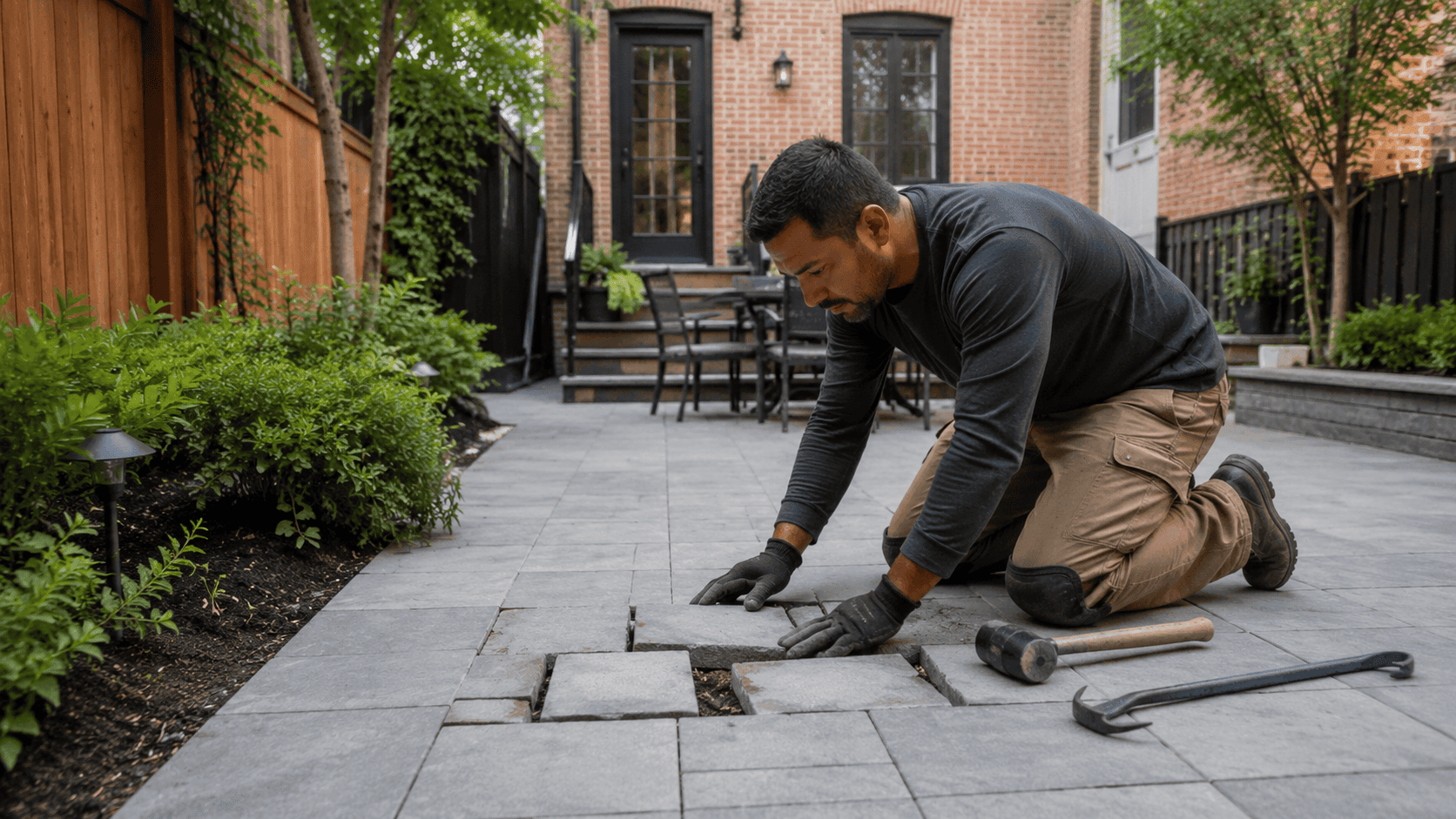
The solution: Lift the pavers, remove the failed material, compact the base again to the right depth in layers, re-screed the sand bed, and reset the pavers. This usually costs $500 to $1,500 for a sunken area under 50 square feet. Larger areas or repeat sinking often point to a drainage problem that needs correction, not just a patch.
Loose or Wobbly Pavers
Symptoms: Pavers rock, shift, or feel unstable underfoot, while the surrounding area may still look fine.
The right paver repair in Queens depends on whether the issue comes from poor base compaction, drainage problems, missing edge restraints, or washed-out joint sand.
What’s causing it:
- Too much sand under a paver. That sand compacts unevenly and creates a loose paver. This is very common in Queens, especially on jobs where installers did not keep the bedding sand at a uniform 1-inch thickness.
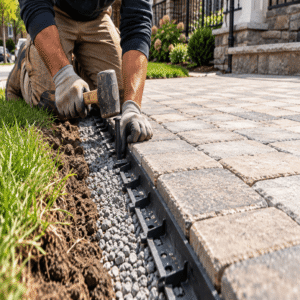
- Missing or failed edge restraints. When the perimeter does not hold properly, the pavers start shifting, often beginning at the edges.
- Washed-out or poorly activated jointing sand. Without properly installed polymeric sand, gaps form between pavers and the system loses its lock.
The fix: If only a few pavers feel loose, lift them, check the sand bed depth, reset them, and re-sand the joints. That usually costs $150 to $500 for a small number of pavers. If the whole perimeter feels loose because it lacks proper edge restraints, adding the right restraints usually costs $300 to $800 for an average residential patio or walkway and stops the issue from getting worse.
Uneven or Heaved Pavers
Symptoms: Parts of the surface lift unevenly and create trip hazards or a wavy look across the patio or driveway.
What’s causing it:
- Frost heave from a weak or shallow base. This is a major issue in Queens. If the base under the pavers is too shallow or poorly compacted, moisture collects below the surface, freezes in winter, and expands. That process pushes sections of pavers upward. Different areas rise and fall at different times, so some spots lift more than others.
- Tree roots. Older Queens properties with mature street trees near the lot line often see this problem.
- Poor original grading. If the installer did not grade the base properly from the start, water does not move evenly and some areas heave more than others.
The fix: This is the most labor-intensive of the three issues. Contractors usually need to remove the affected pavers, correct the base depth and compaction, deal with root or drainage problems if needed, regrade for proper drainage, and reinstall the pavers. For an area under 100 square feet, repairs usually cost $1,200 to $3,000. If heaving affects a large section, a full reinstall may make more financial sense than continued patch repairs.
When to Repair vs. When to Reinstall
In general, if sinking, looseness, or unevenness affects less than 20 percent of the total surface area, targeted repair usually makes sense. If the same problems keep showing up in multiple sections, or if the same areas fail again after previous repairs, the issue usually comes from a broader failure in the original base, not just the visibly damaged spots.
In that situation, a proper reinstall with the correct base depth often costs less over time than repeated patch repairs every year or two.
How to Avoid These Problems in the Future
A few simple steps can help, no matter who installed your pavers:
- Keep gutters and downspouts from dumping water directly onto paved surfaces.
- Fix small uneven or sunken areas before they spread.
- If the same spots keep failing, stop spending money on surface-only repairs until someone checks the base underneath.
Why NY Pavers for Repair in Queens
For more than 23 years, NY Pavers has diagnosed and repaired sinking, loose, and uneven pavers across Queens. The team determines whether a repair will solve the issue or whether the base itself needs correction, and they tell you that before the work starts.
They offer no-cost estimates and repair assessments throughout Queens, Brooklyn, and Long Island.
For a proper diagnosis and lasting paver repair, call (718) 838-0982 or visit nypavers.com.