Exterior materials temperature changes play a huge role in how long a building actually lasts. Mother Nature is a structure’s biggest critic, constantly testing it with heat, cold, and rapid seasonal swings. Buildings aren’t static objects — they expand in summer, contract in winter, and react every single day to temperature stress. If you ignore how exterior materials handle these temperature changes, damage isn’t a matter of if, it’s when.
If you don’t account for “thermal movement,” your building will literally commit slow-motion suicide. Here is the “all guns blazing” truth about how your exterior materials are fighting a war against the thermometer every single day.
Wood: The Drama Queen of Materials
Wood is beautiful, but it is incredibly temperamental. It’s basically a sponge. When it gets hot and humid, it swells up; when it freezes and dries out, it shrivels.
The Reality:
If you don’t leave enough room for wood to move, it will warp, twist, and eventually split its own fibers. And it’s not just the heat, it’s the moisture that comes with it. If you don’t seal it and vent it properly, those seasonal shifts turn into rot. Wood needs a pro install and constant babysitting (staining and sealing) or it’ll look like a weathered wreck in five years.
Brick: The Quiet Survivor
Brick is the “strong, silent type,” but even it has a breaking point. Bricks expand when the sun beats down on them, and that movement has to go somewhere.
The Reality:
The mortar between the bricks is the “shock absorber.” If the mortar is too stiff or the joints are poorly designed, the brick will crack under the pressure. The real killer, though, is the “freeze-thaw” cycle. If water gets into a porous brick and freezes, it expands like a grenade, popping the face right off the brick (we call it spalling). Keep your mortar joints healthy, or the seasons will turn your solid wall into a pile of rubble.
Concrete: The Cracking King
Concrete is a tank, but it’s a brittle one. It has zero patience for temperature swings. It expands and contracts with more “attitude” than almost any other material.
The Reality:
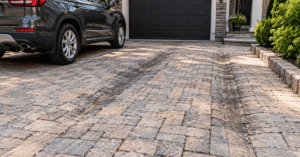
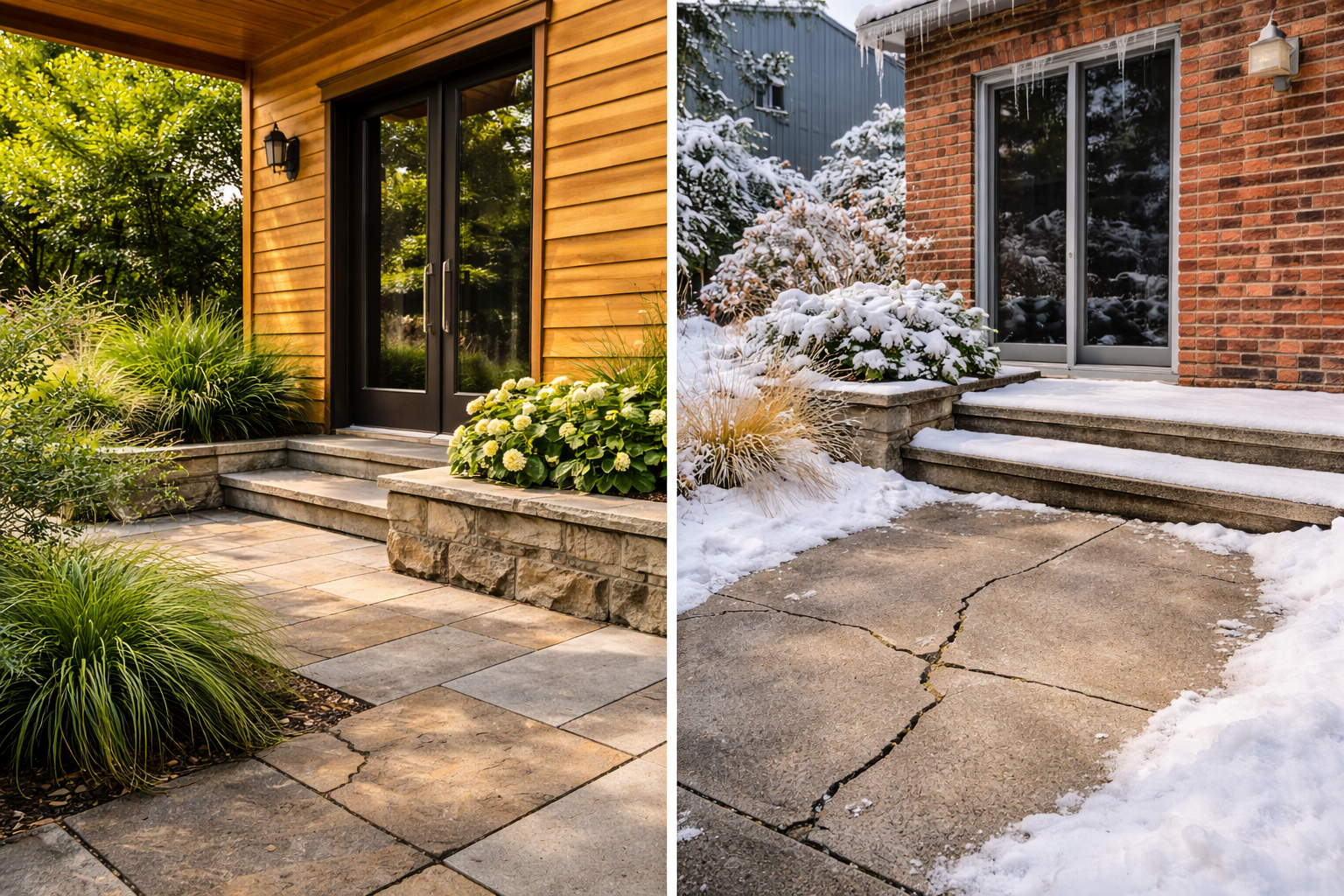
If you don’t put expansion joints in concrete, it will make its own, and they won’t be pretty. We call those “cracks.” In the winter, salt and water get into those tiny fissures, freeze, and rip the concrete apart from the inside. To keep concrete alive, you have to be obsessive about the mix, the joints, and the sealer. If you “pour and ignore,” the seasons will win every time.
Stone: The Rugged Elite
Natural stone is about as durable as it gets, but even it isn’t bulletproof. Different stones have different “pain thresholds.”
The Reality:
Dense stones like granite can handle almost anything, but softer, porous stones like limestone can be sensitive. If they soak up water and the temperature drops, they start to flake and chip. Stone is a “buy once, cry once” material, it handles temperature better than most, but it still needs to be sealed to keep the internal ice-bombs from forming during a deep freeze.
Metal: The Fast Mover
Metal is the most reactive material on the list. It’s like a thermometer, it reacts to heat and cold almost instantly.
The Reality:
Metal cladding or roofing can grow significantly in length on a hot summer afternoon. If you’ve fastened it down too tight with zero “give,” the metal will buckle, oil-can, or literally rip the screws right out of the frame. You need flexible fasteners and “thermal breaks” so the metal can slide back and forth without destroying the structure. It’s a high-performance material, but it requires a high-performance installation.
Composites: The Tech Shield
This is where science tries to beat nature. Engineered materials like fiber-cement and composite decking are designed specifically to stop the “expand-contract” nightmare.
The Reality:
High-quality composites are loaded with stabilizers to keep them still. They don’t rot, they don’t warp, and they don’t split like wood. They are the “set it and forget it” option for people who are tired of fighting the seasons. While they might not have the “soul” of natural wood or stone, they are the most reliable way to ensure your exterior doesn’t look like a disaster zone after a decade of winters.
The Bottom Line
Every material has a “pulse” driven by the sun and the frost. If you ignore that pulse, you’re building a ticking time bomb. The secret to a building that lasts is picking materials that fit your climate and installing them with enough “breathing room” to move. Don’t fight physics, you’ll lose. Build with the seasons, and your project will actually stand the test of time. Understanding exterior materials temperature changes is the difference between a structure that lasts decades and one that slowly fails from the inside out. When materials are chosen and installed with seasonal movement in mind, they don’t fight the climate — they survive it.