New York Pavers installs and repairs paved walkways across all five NYC boroughs. We plan each path around the entrances, gates, and outdoor spaces it connects, and check the ground beneath it before recommending a repair or new installation.
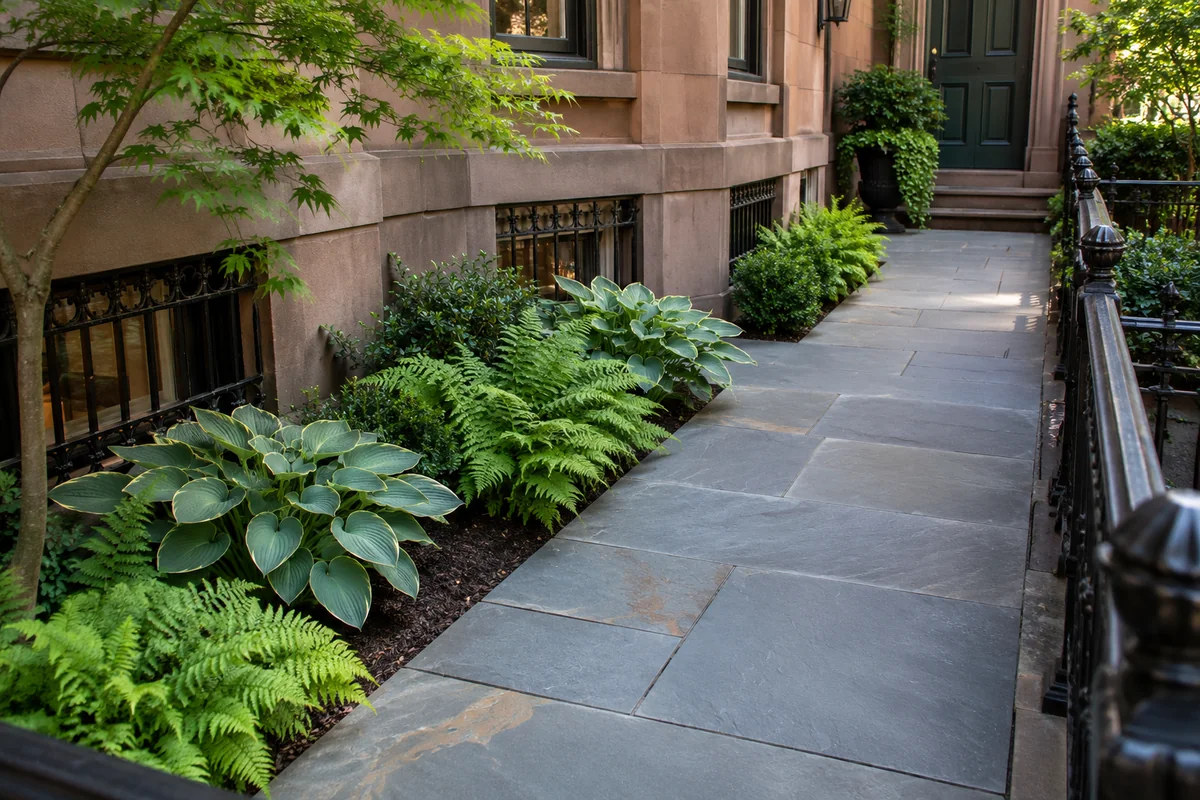
Walkway Pavers
Rocking blocks, separated edges and low spots can make a walkway difficult to use. Repeated movement deserves attention to the supporting layers and nearby conditions, rather than another surface-only adjustment.
We consider the path's width, corners, gate clearance and connections to adjoining paving. Access for removal and deliveries also matters, especially when the work is behind a building or down a narrow passage.
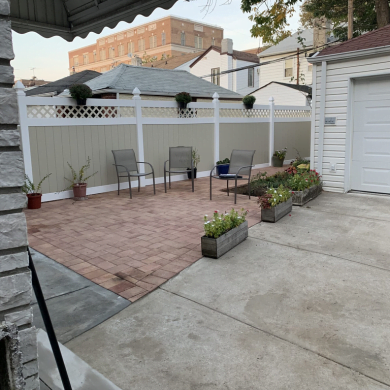
Make a compact walkway is easier to use with a paving layout suited to its proportions. We plan the pattern, borders and connections to existing entrances while allowing space for planting and furniture where the footprint permits.
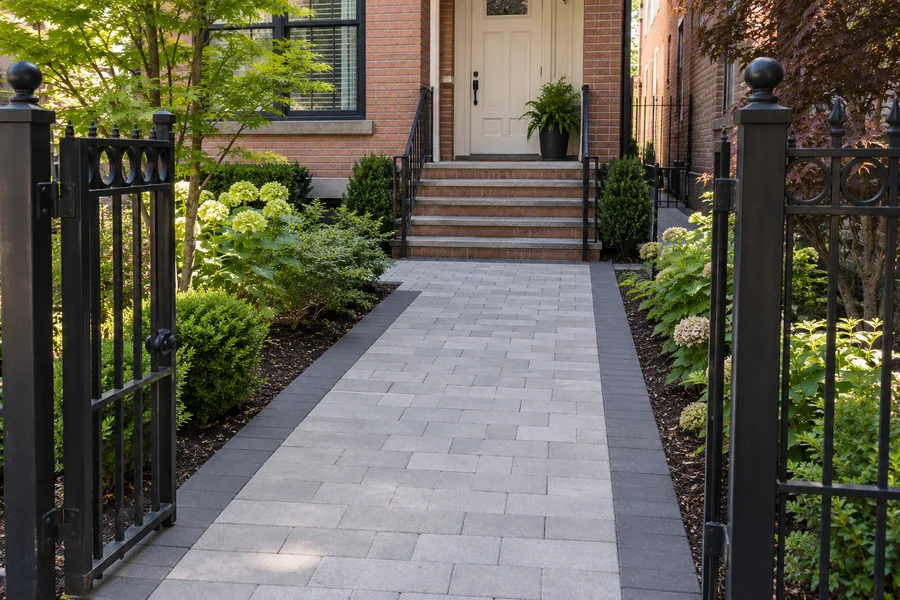
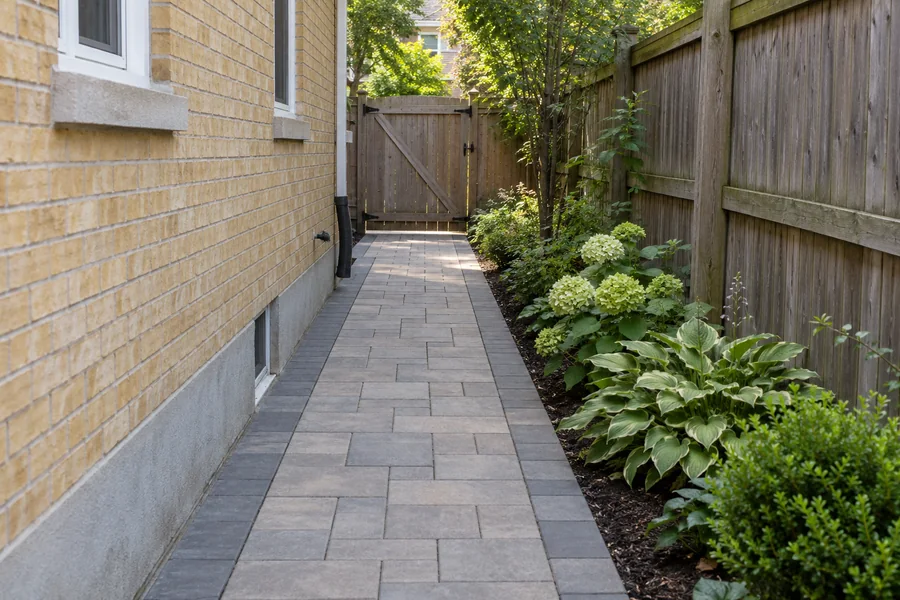
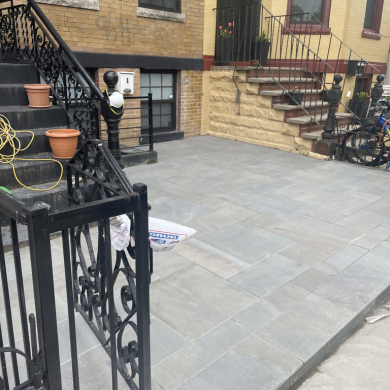
Turn a worn side path into a more usable connection between the front and rear of the property. The proposed paving accounts for restricted access, nearby walls, drainage points and the clearance needed at doors and gates.
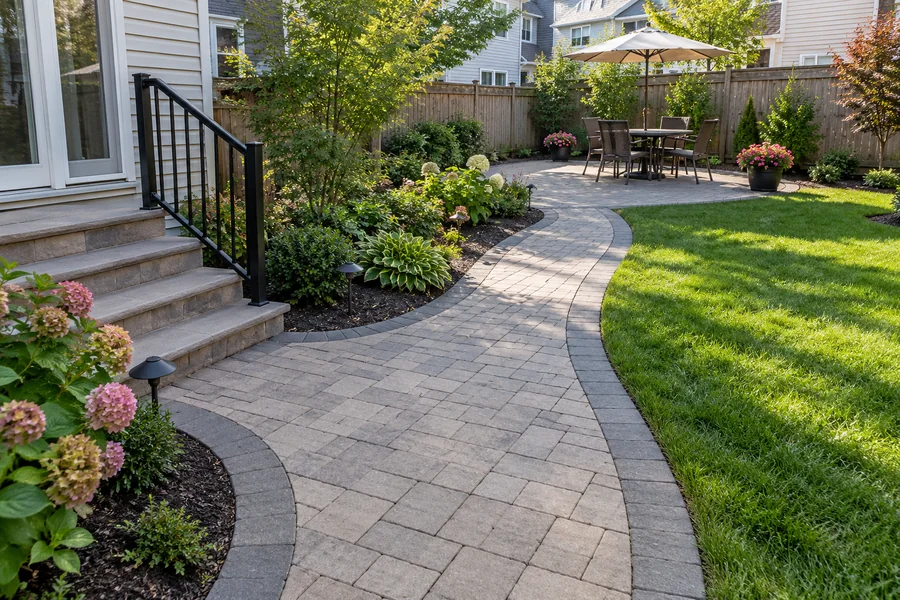
Link a garden gate, rear entrance or patio with a continuous paved path. Straight or gently curved layouts can follow the route you need while preserving lawn and planted beds around it.
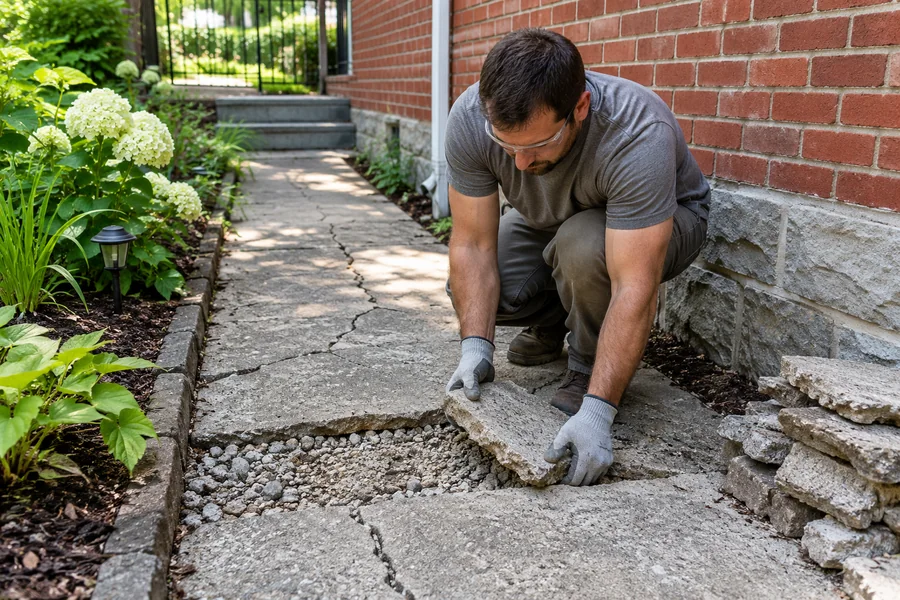
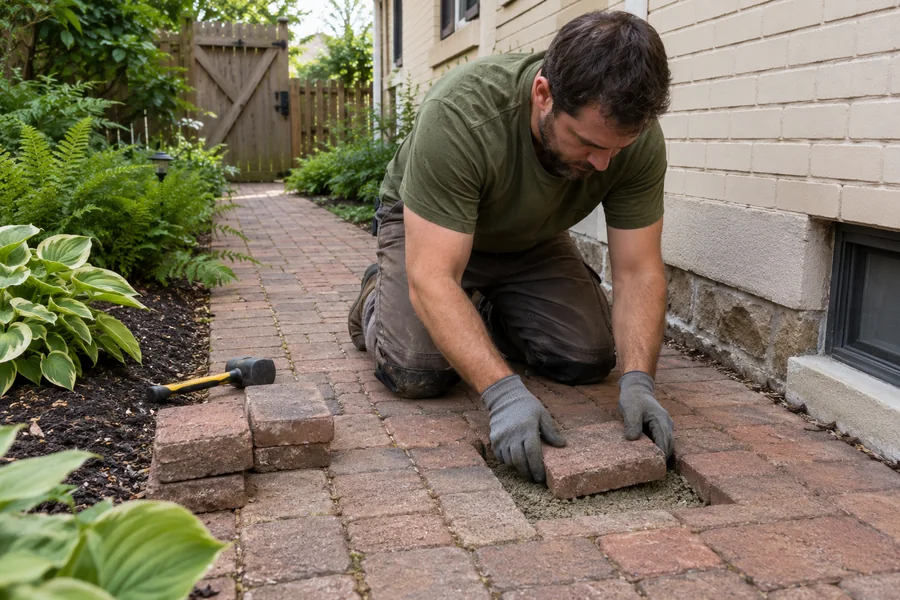
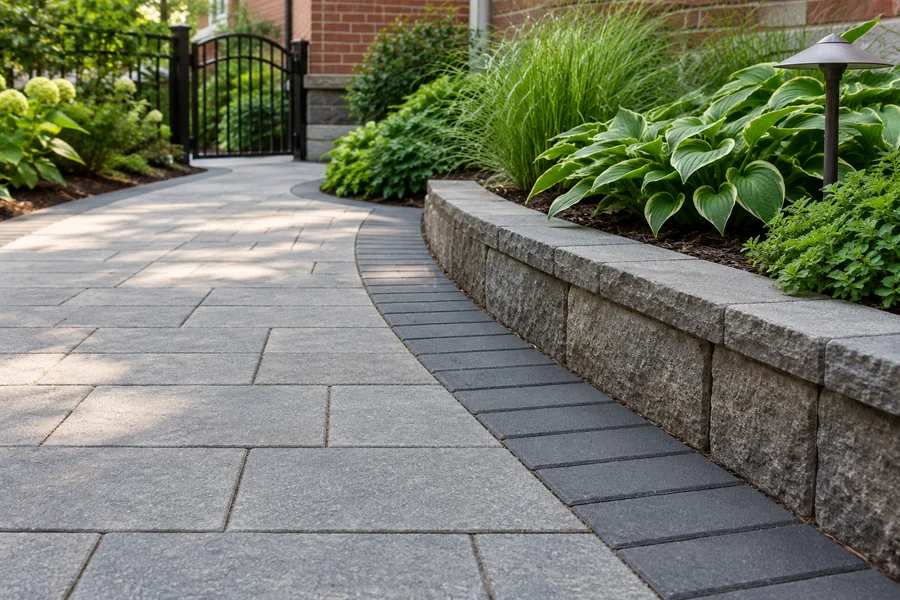
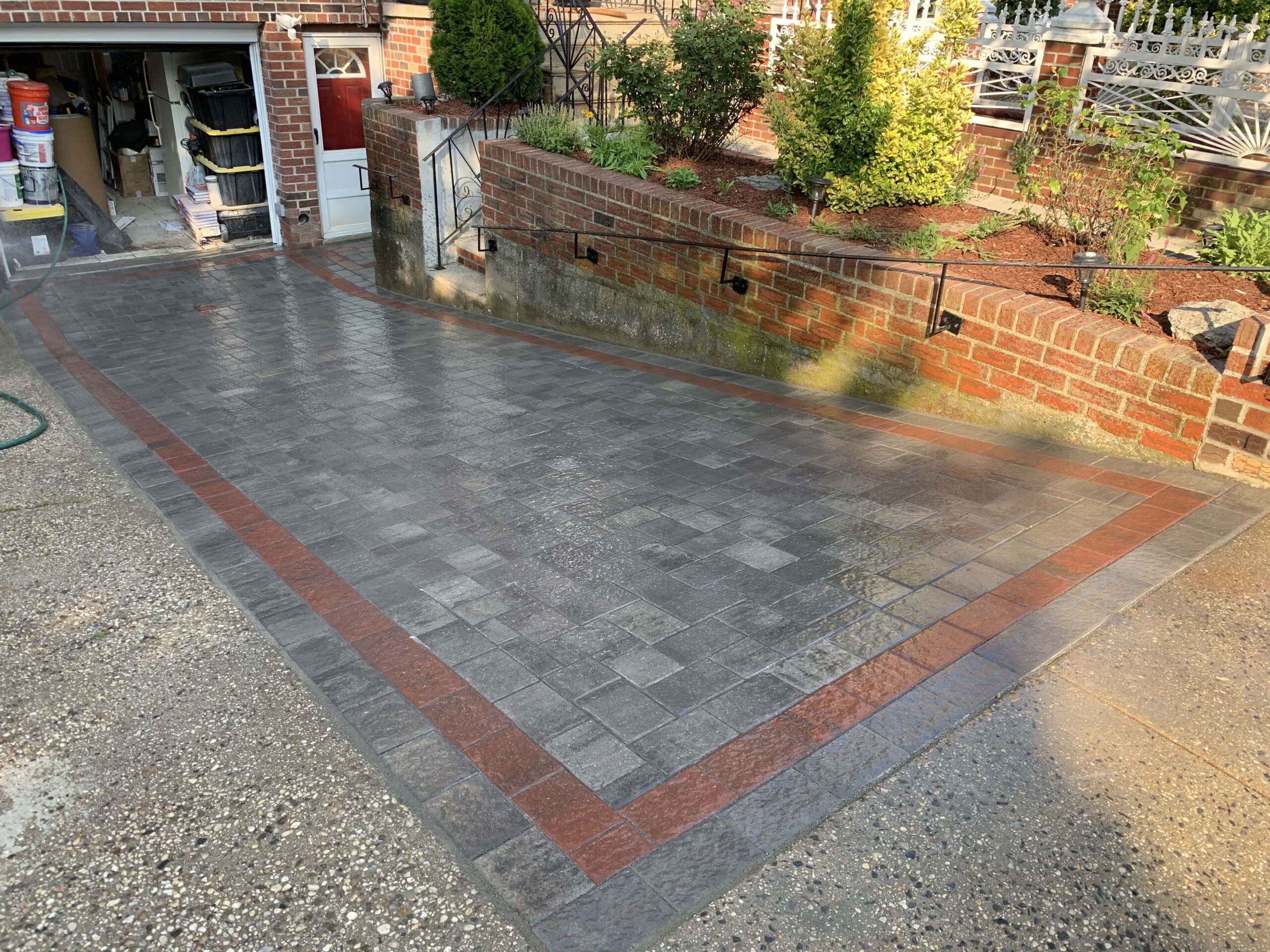
Define the path beside planting or adjoining paving with a coordinated border. We review edge support as well as appearance, since a decorative border alone does not resolve movement in the underlying installation.
A walkway improvement can focus on the path itself: its condition, its edges and how it meets the entrance. Retaining the garden helps the paving remain part of the frontage rather than taking it over.
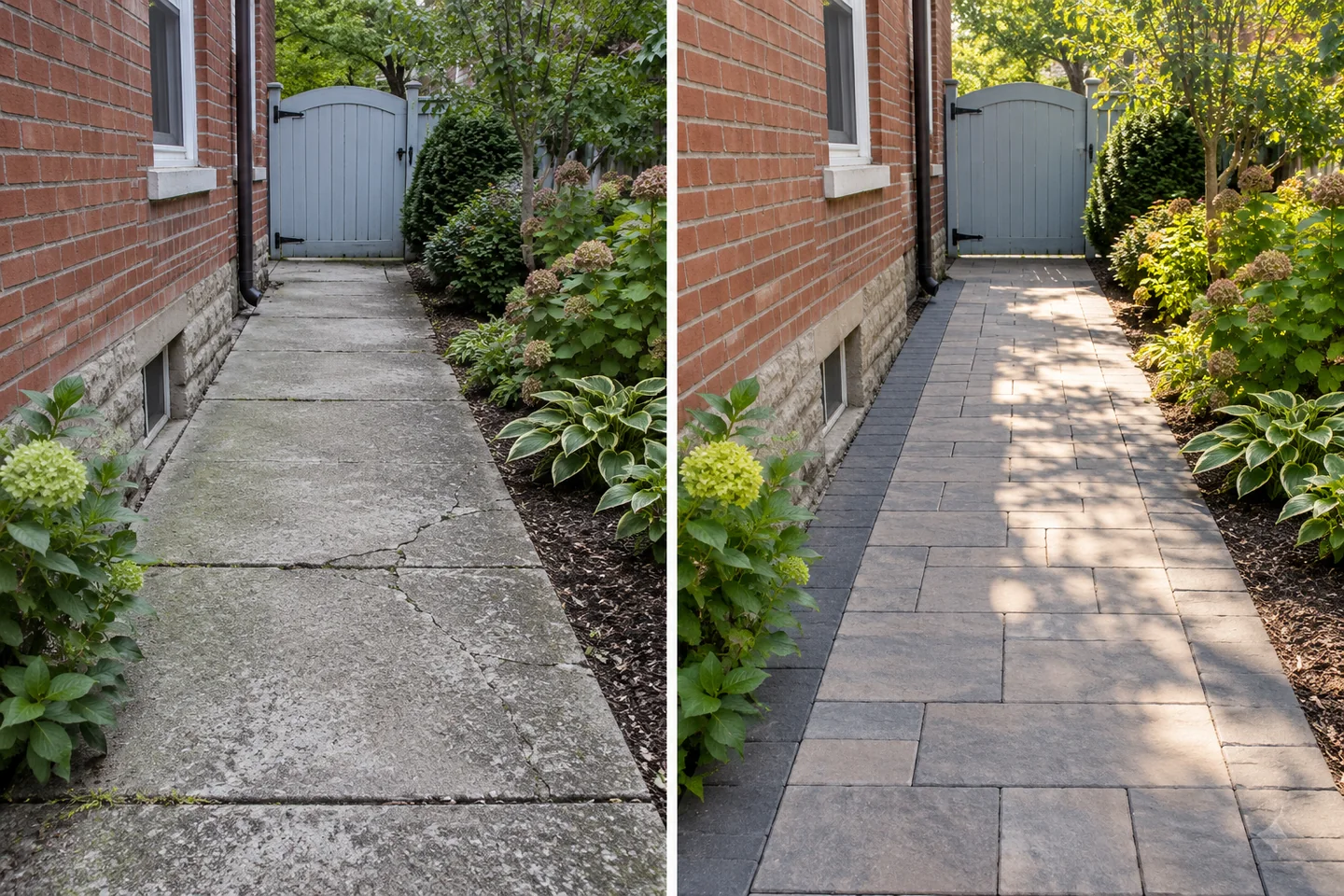
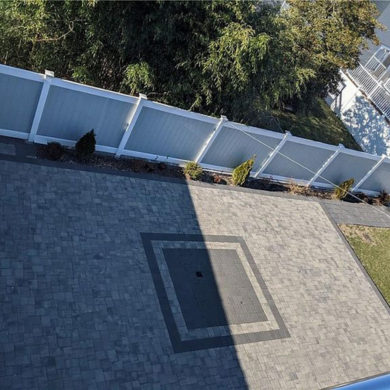
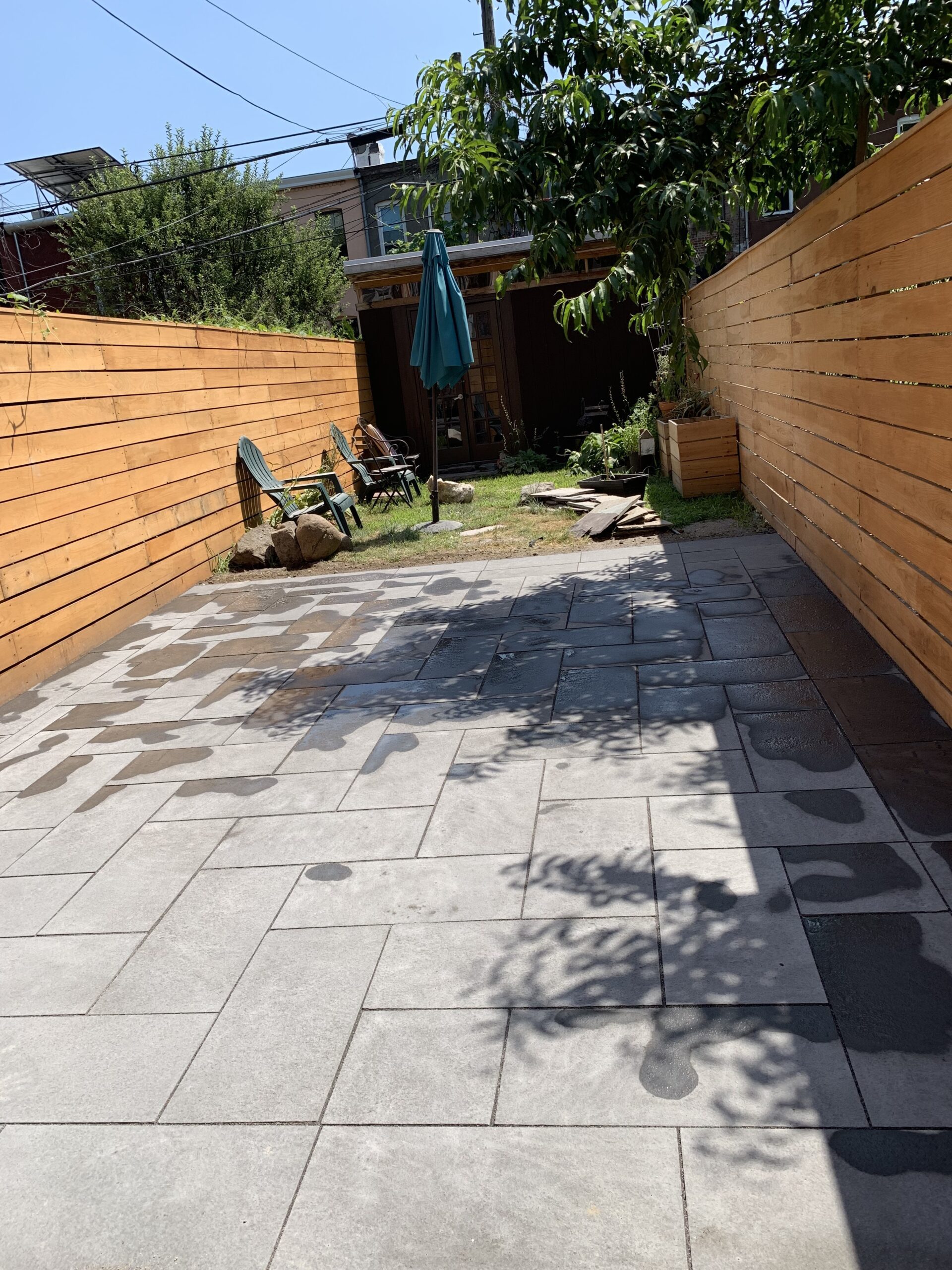
A worn concrete side path is shown with a new gray paver surface and dark border. The route to the pale blue garden gate and the surrounding planting remain recognizable. For an actual property, removal, supporting construction and finished levels would be agreed before installation.
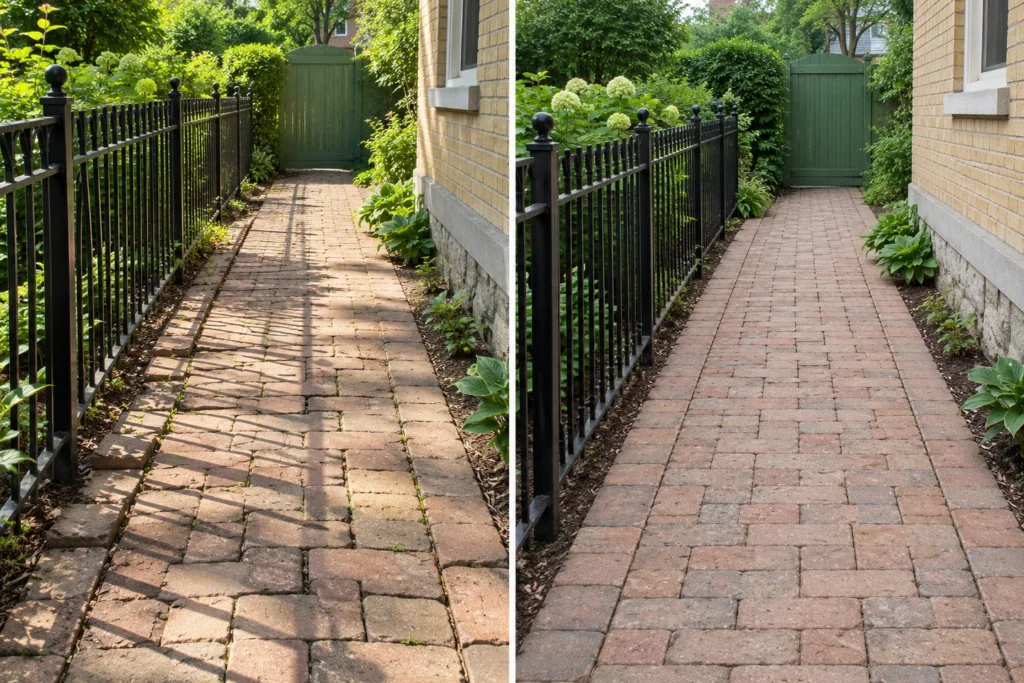
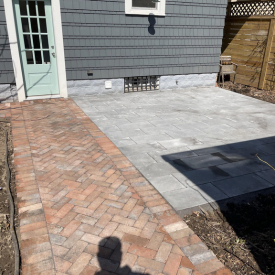
The second image shows a reddish-tan path beside a yellow-brick house, with uneven units and displaced edges reimagined as a more even route. Reusing sound paving can retain its established appearance while addressing the affected section and its support.
Read feedback from NY Pavers customers, then speak with us about the paving work your property needs.


 Trustindex verifies that the original source of the review is Google.
 Trustindex verifies that the original source of the review is Google.
 Trustindex verifies that the original source of the review is Google.
 Trustindex verifies that the original source of the review is Google.
 Trustindex verifies that the original source of the review is Google.
 Trustindex verifies that the original source of the review is Google.
 Trustindex verifies that the original source of the review is Google.
 Trustindex verifies that the original source of the review is Google.
 Trustindex verifies that the original source of the review is Google.


 Verified
 Verified
 Verified
 Verified
 Verified
 Verified
 Verified
 Verified Verified
 Verified
See how different paving choices can suit entrance routes, planted paths and narrow passages.
Tell us where the walkway leads, how it is used and what you want to change. Photos of its full length, gates and damaged areas help explain the project before the visit.
We review the surface, visible movement, drainage, adjoining levels and access for the work. Material choices and layout options are discussed in relation to the property.
Review the proposed removal, preparation, paving and edge details in the estimate. Confirm material selection, access arrangements and any required permissions before scheduling the work.
The walkway is completed to the agreed scope, with its transitions and finish reviewed at handover. We discuss care of the selected paving and when the new or repaired route can be used.
More than two decades of experience with natural stone installation, repair, resetting, patios, walkways, steps and exterior stonework across NYC properties.
Professional natural stone work backed by proper coverage, careful material selection and an experienced team focused on dependable installation and restoration.
We serve Brooklyn, Queens, Manhattan, Staten Island, and the Bronx. We check drainage, access, and how the walkway meets existing gates, steps, and paving.
Got questions? We’ve got answers.
The estimate depends on the path’s length and width, selected pavers, removal work, supporting construction and access. Curves, borders and connections to existing steps can also affect the scope. A narrow passage may require more material handling than an open front path. NY Pavers provides a free on-site estimate based on the actual work.
Concrete pavers and natural stone offer different sizes, textures and appearances. Choose a product suitable for outdoor pedestrian use and the proposed installation system. Compare samples against the building and consider shade, cleaning needs and joint layout. There is no single material that is best for every property.
Width should reflect the people and equipment using the route, along with gates, turns and the available space. A garden path and a main entrance route may have different needs. Where accessibility or other code requirements apply, they must guide the design. We review these constraints before agreeing the layout rather than applying one width to every job.
Often, a localized area can be lifted and relaid if the pavers are sound and the cause of movement can be addressed. Broken units, widespread settlement or unsuitable support may require a different approach. Matching replacements can vary from older, weathered paving, so appearance should be discussed before the repair.
Not by itself. Water may collect because of surface levels, runoff from elsewhere, drainage restrictions or conditions below the paving. These need to be assessed together. Standard pavers are not automatically permeable, and a permeable system needs suitable materials and supporting construction for the site.
An overlay is possible only where the existing surface and proposed system are suitable. Movement, cracking, drainage and added height at gates or steps can make it inappropriate. Covering failing concrete may leave the original problem in place. The site assessment helps determine whether removal and rebuilding is the better option.
This page covers private pedestrian paths within a property. Work on the public sidewalk or curb has a separate scope and applicable requirements. For private paths, approval needs depend on the proposed work and property; landmark or historic-district restrictions may also apply. Confirm the requirements for the actual project before construction begins.
Sweep away leaves and grit, clean spills with products suitable for the material and check joints and borders for movement. Keep drain openings clear. Shaded areas may need additional cleaning where organic growth develops. Follow the selected product’s guidance for washing, winter care and sealing; aggressive cleaning can damage paving or remove joint material.
Tell NY Pavers about the path you want to install, replace or repair. Include your property location, photos and any concerns about uneven paving, access or standing water. We will discuss the next step for your walkway.