New York Pavers installs, replaces, and repairs courtyard paving across all five NYC boroughs. Whether you’re planning a small seating area or updating a shared courtyard, we’ll help you choose a surface that fits the space, its entrances, and how people use it.
Courtyard Pavers
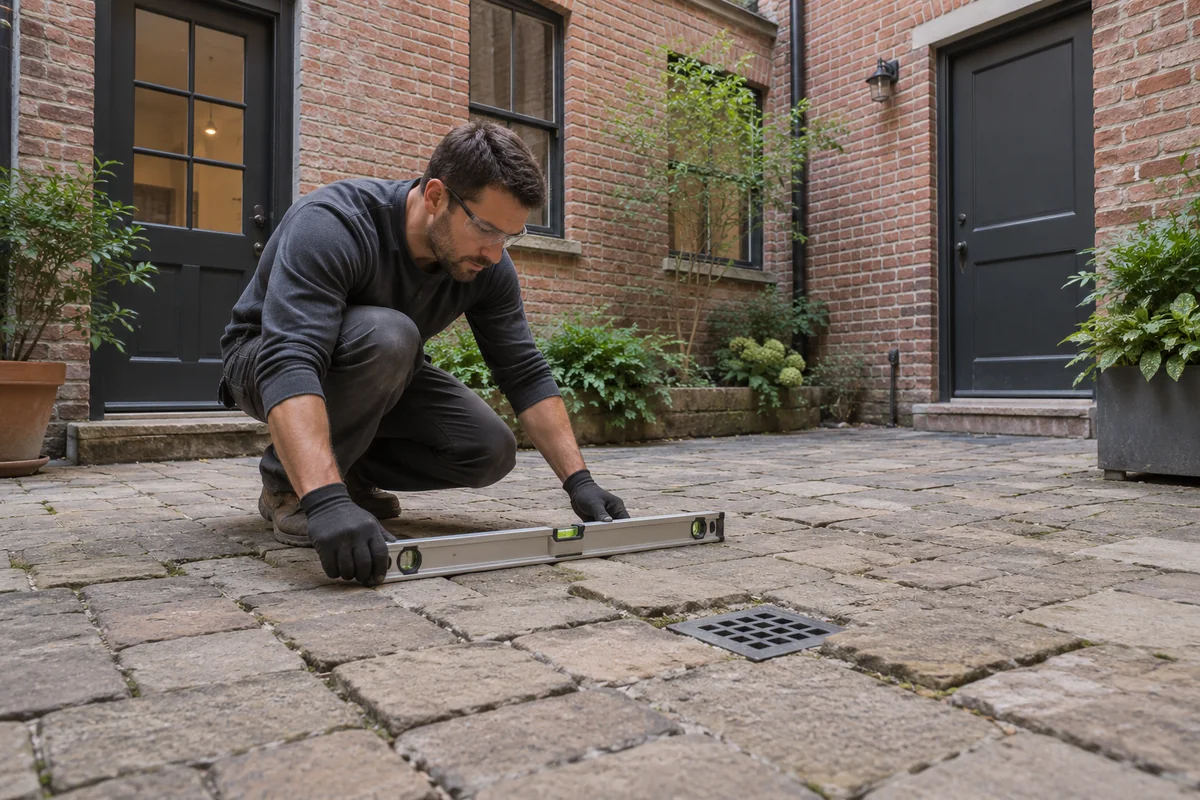
Low door thresholds, existing drains and nearby cellar entrances need attention before the paving height is set. Tell us where water collects and whether there has been leakage below. Changing the surface alone may not resolve an underlying drainage or waterproofing problem.
Narrow passages, steps and occupied entrances affect how materials can be delivered and removed. For shared properties, the work plan also needs to account for building rules, resident access and the space available for temporary storage.
We install and repair courtyard pavers across NYC. Explore options for shared courtyards, small spaces, and existing paving that needs to be reset or replaced.
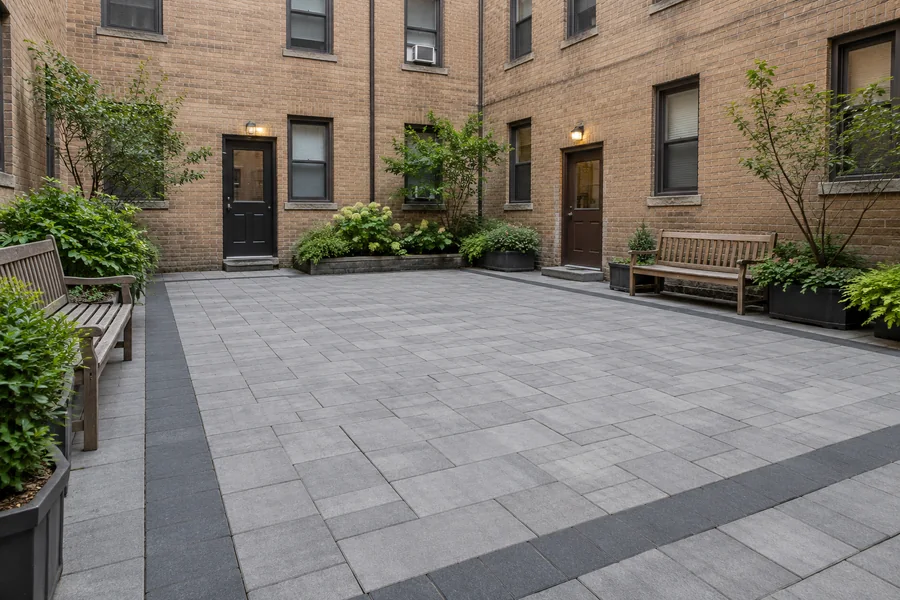
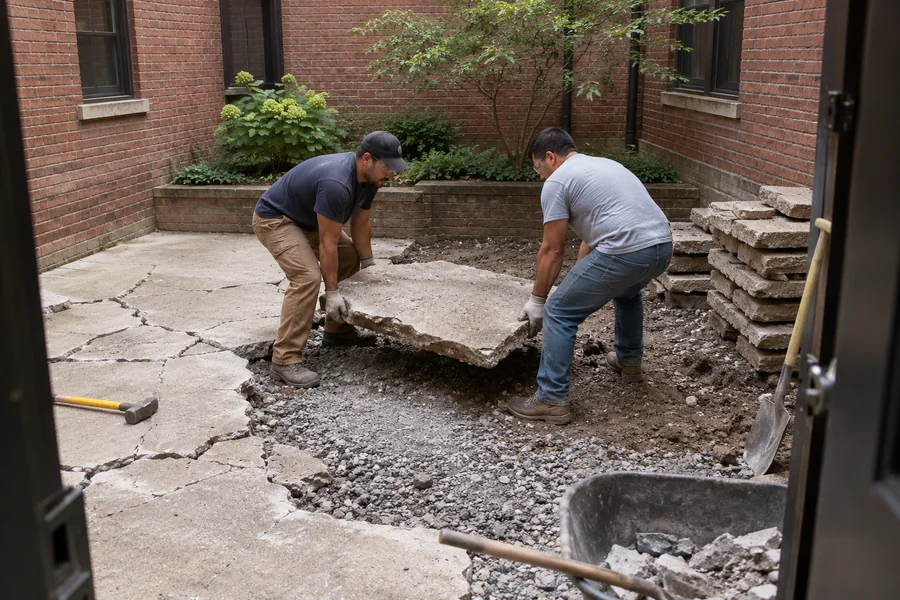
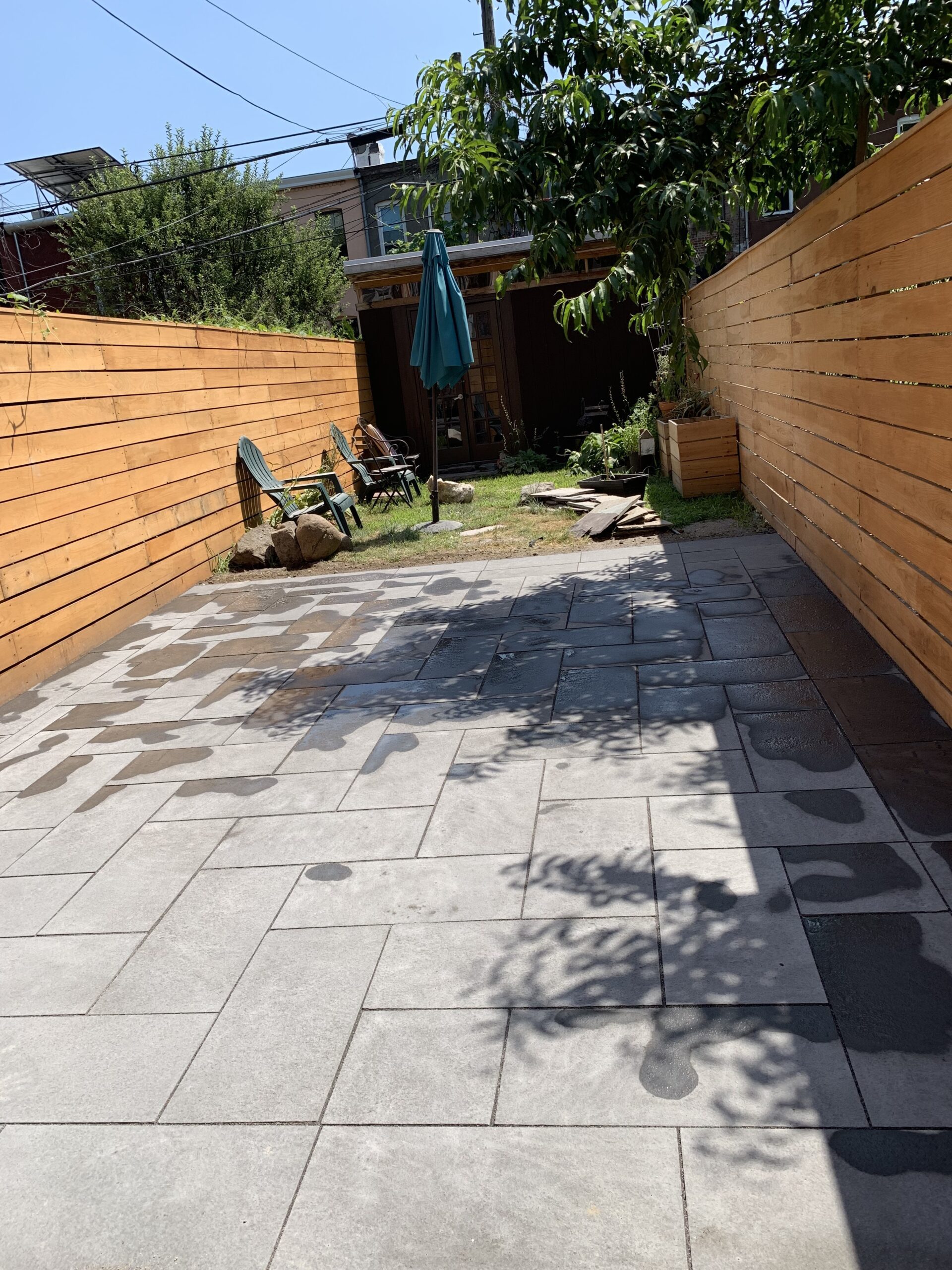
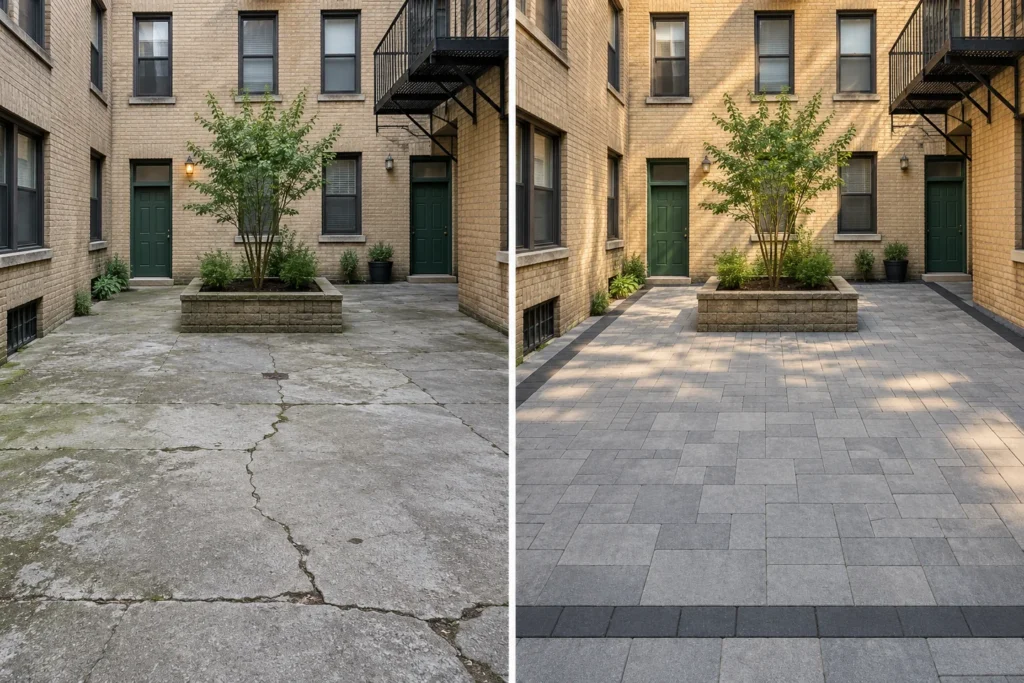
Replace worn paving or damaged concrete when the existing surface no longer suits the courtyard. The scope depends on removal needs, the condition beneath the surface and the finished levels required at doors, steps and drainage points.
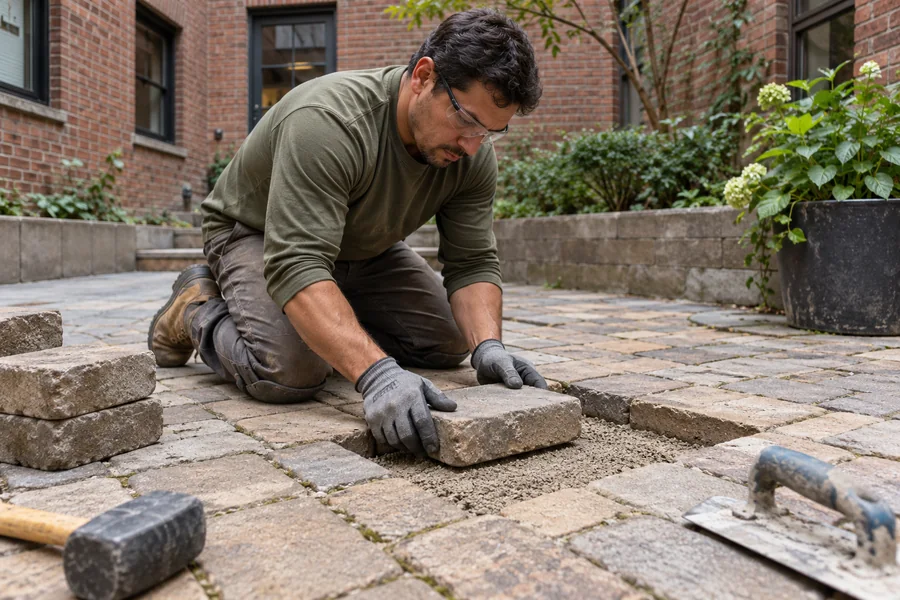
Address localized settlement, rocking units or open joints where the existing pavers can be reused. We assess the affected area and likely cause before recommending resetting, replacement units or a more extensive repair.
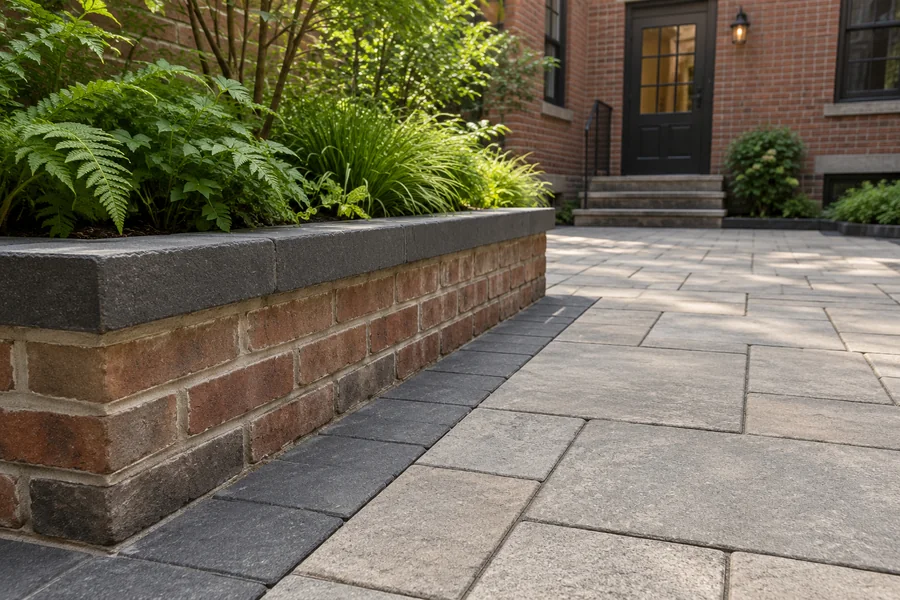
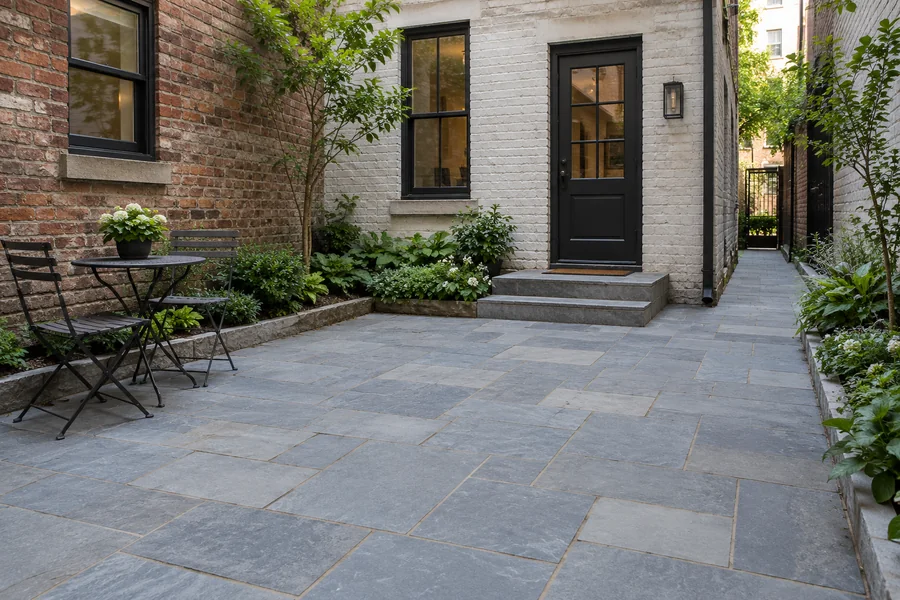
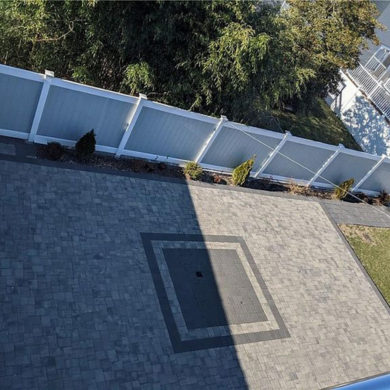
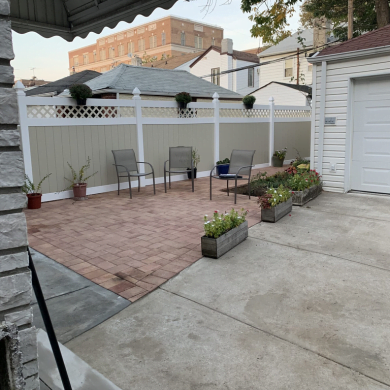
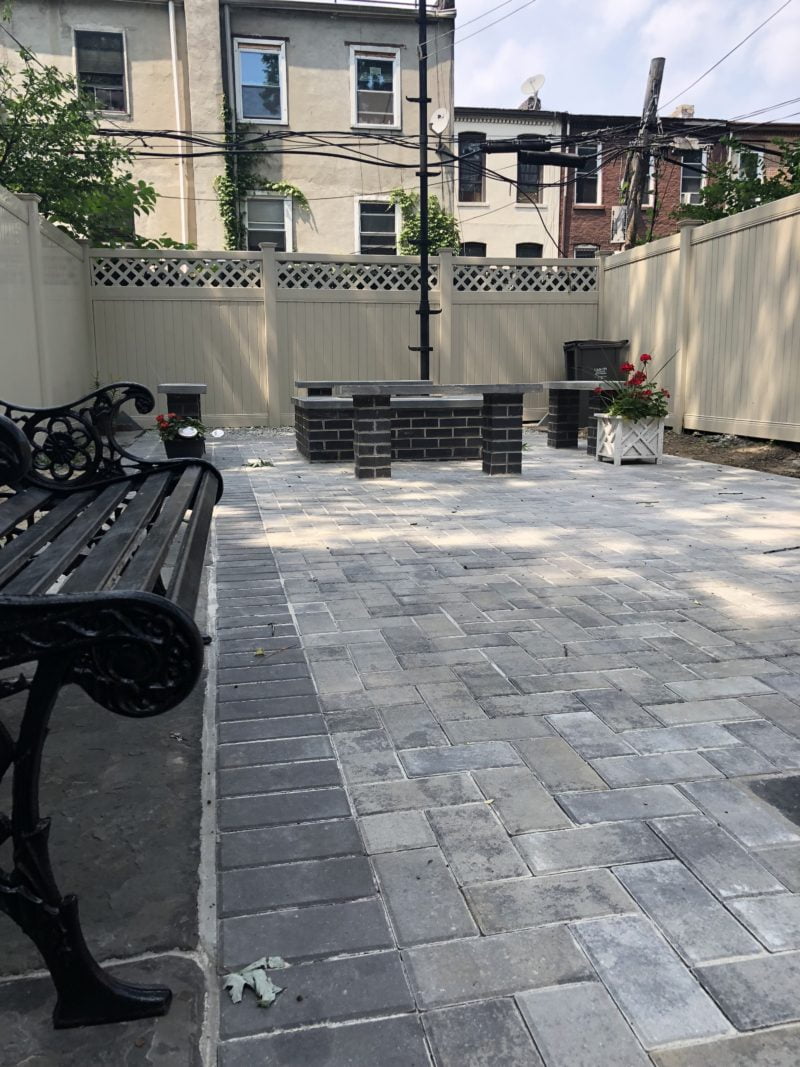
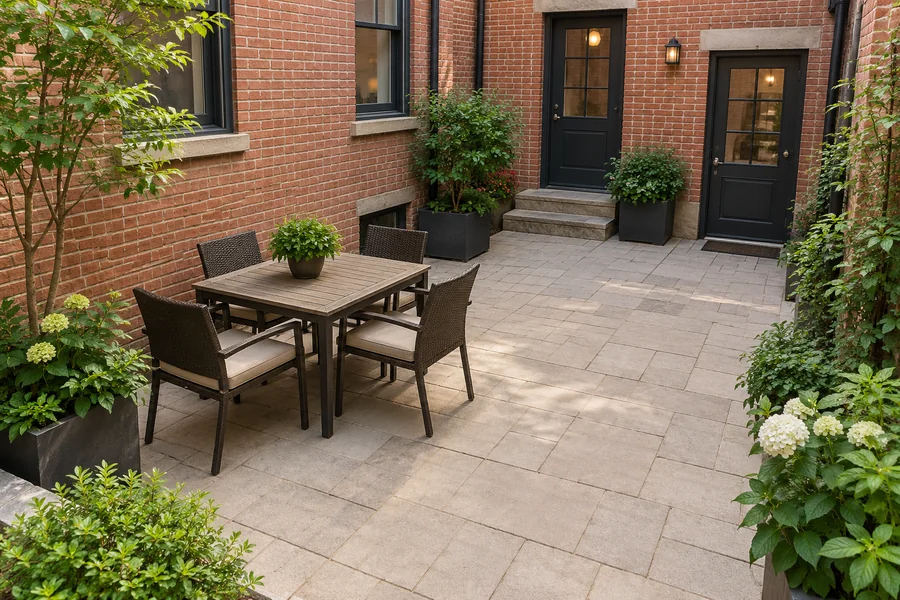
Make a compact courtyard easier to use with a paving layout suited to its proportions. We plan the pattern, borders and connections to existing entrances while allowing space for planting and furniture where the footprint permits.
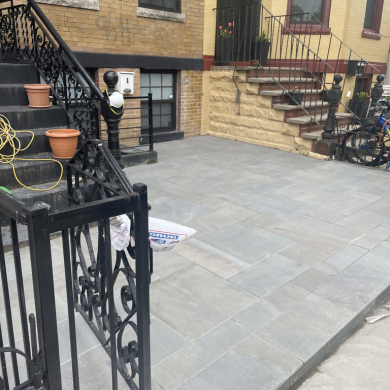
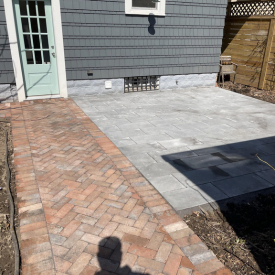
A court-yard improvement can focus on the path itself: its condition, its edges and how it meets the entrance. Retaining the garden helps the paving remain part of the frontage rather than taking it over.
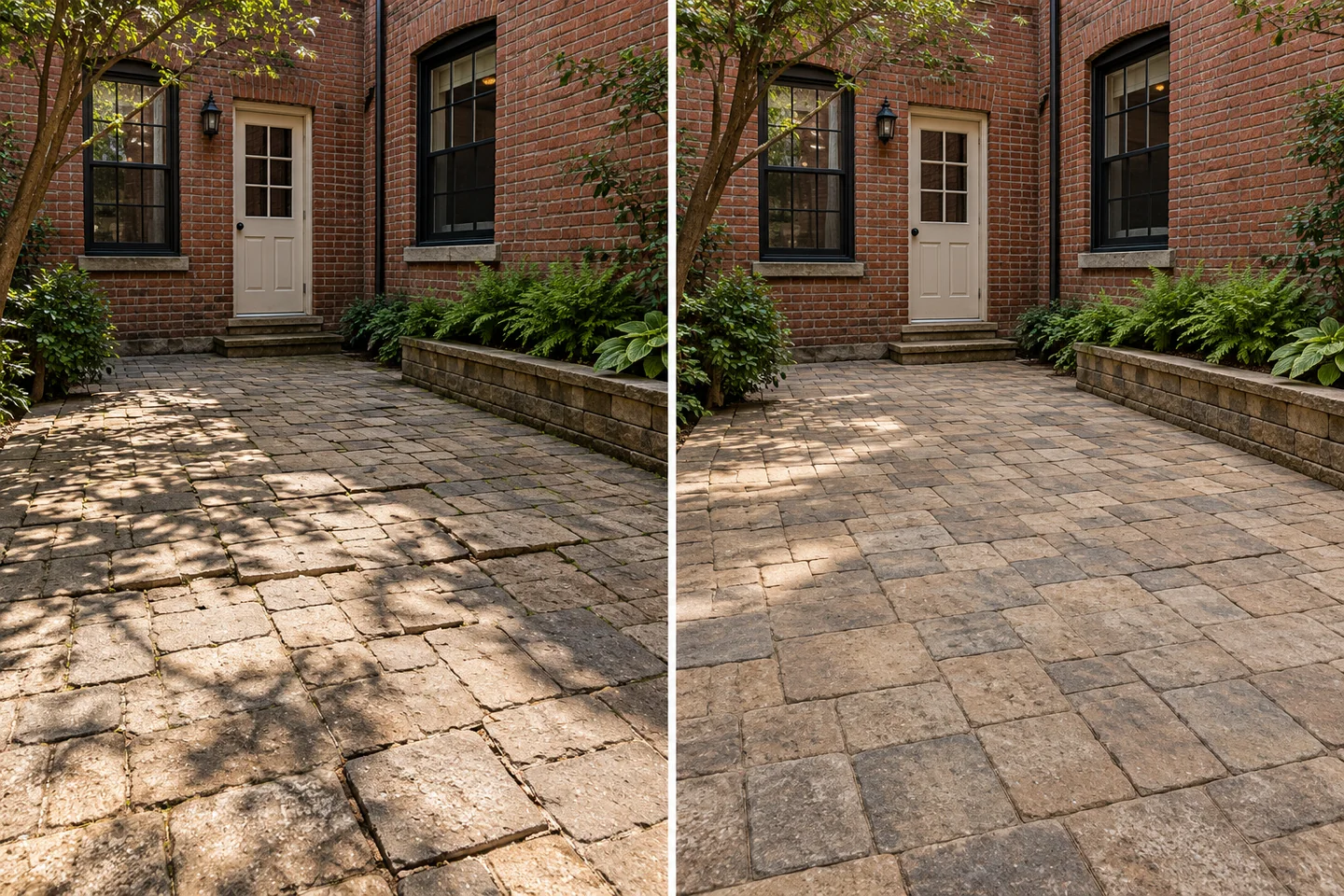
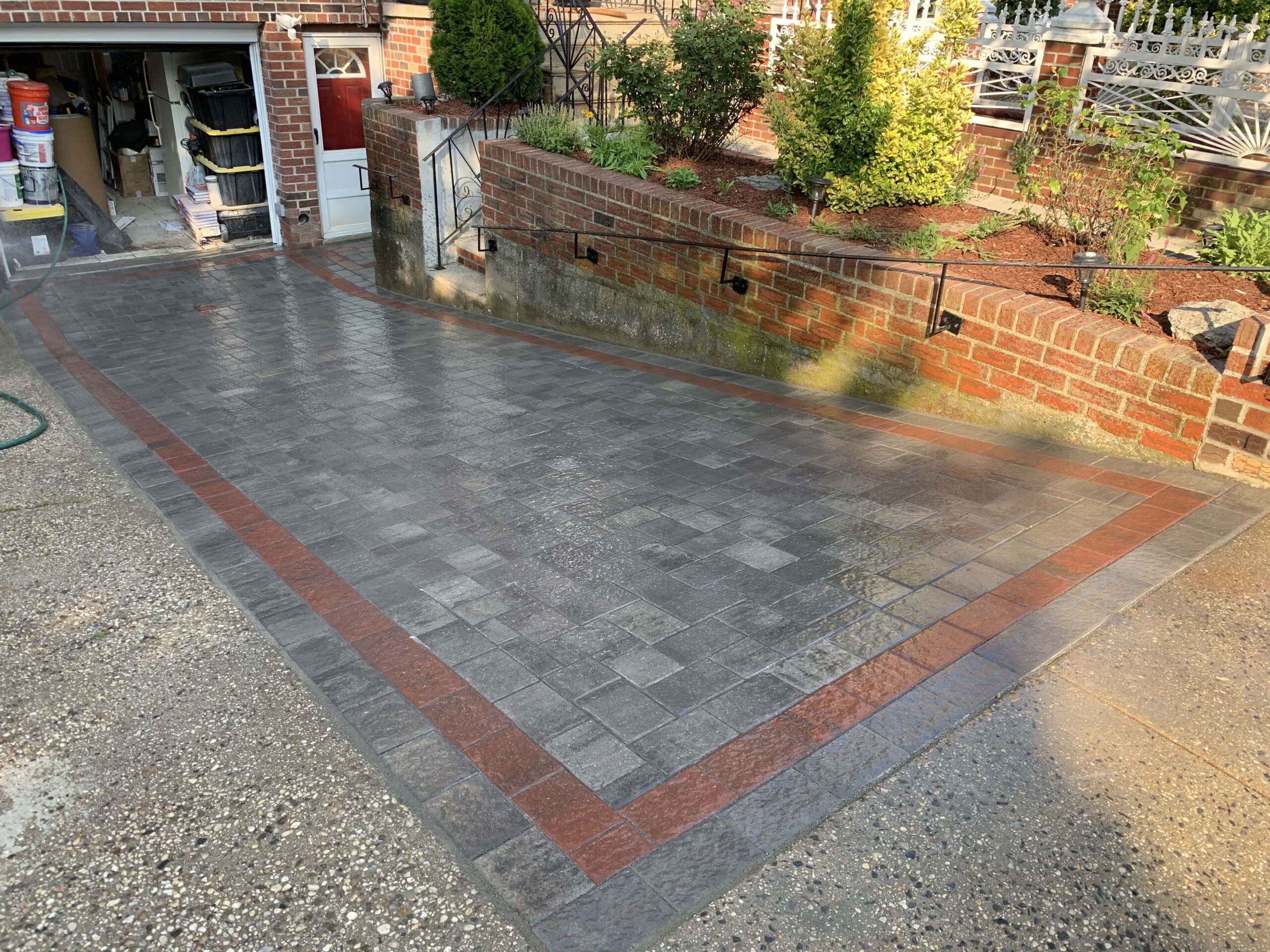
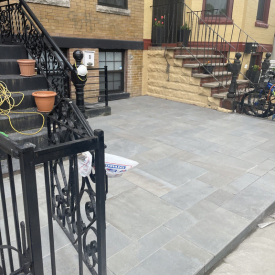
The second visual shows settled paving reimagined as a more even surface while retaining its weathered appearance. Reusing sound pavers can be worth considering where the cause of movement can be addressed and the wider installation remains suitable.
Tell us how you use your courtyard, what needs repair, and how we can access it. We offer free on-site estimates for courtyard paving in all five NYC boroughs.


 Trustindex verifies that the original source of the review is Google.
 Trustindex verifies that the original source of the review is Google.
 Trustindex verifies that the original source of the review is Google.
 Trustindex verifies that the original source of the review is Google.
 Trustindex verifies that the original source of the review is Google.
 Trustindex verifies that the original source of the review is Google.
 Trustindex verifies that the original source of the review is Google.
 Trustindex verifies that the original source of the review is Google.
 Trustindex verifies that the original source of the review is Google.


 Verified
 Verified
 Verified
 Verified
 Verified
 Verified
 Verified
 Verified Verified
 Verified
Explore paving layouts, material appearances and work stages for enclosed outdoor spaces.
Share your location, goals, photos and any concerns about pooling, uneven paving or access. Let us know whether the courtyard is private or shared and whether there is a cellar or other space below.
The assessment considers the existing surface, entrances, visible drainage points and delivery route. We discuss material options and identify any additional information or specialist assessment needed before the scope can be finalized.
Review the proposed work, material selection and estimate. Confirm building permissions, access arrangements, storage space and scheduling requirements before work begins, particularly where residents share the courtyard.
Work proceeds according to the agreed scope and site conditions. At completion, review the finished area and discuss care of the selected paving, joints and drainage access points.
More than two decades of experience with natural stone installation, repair, resetting, patios, walkways, steps and exterior stonework across NYC properties.
Professional natural stone work backed by proper coverage, careful material selection and an experienced team focused on dependable installation and restoration.
We serve Brooklyn, Queens, Manhattan, Staten Island, and the Bronx. We check access, drainage, and the condition of the existing paving before recommending a repair or replacement.
Got questions? We’ve got answers.
Cost depends on the courtyard’s size, selected material, removal work, support beneath the paving and access for deliveries and debris removal. Drainage changes and additional assessment can also affect the scope. A small enclosed area can involve substantial handling work if everything must pass through a narrow route. NY Pavers provides a free on-site estimate based on the property.
There is no single best material for every courtyard. Concrete pavers, suitable exterior porcelain and natural stone offer different appearances, sizes and care requirements. The choice also depends on the support system, available height, shade and intended use. Compare actual product samples and outdoor suitability before making the final selection.
Not automatically. Pooling may relate to surface levels, blocked or inadequate drainage, conditions below the paving or other building issues. The cause should be assessed before a solution is proposed. Ordinary paver joints do not make the courtyard a designed permeable system, and replacing the visible surface is not a guarantee against leakage below.
Potentially, but the existing construction must be assessed first. Available height, structural support, waterproofing and drainage all matter. Do not assume a ground-level courtyard has soil immediately beneath it. Where the courtyard covers a cellar or other space, appropriate professional assessment may be needed before the paving system and scope can be agreed.
Access is part of the initial assessment. Passage width, stairs, turns, building protection and material storage can influence the method, cost and schedule. Send photos of the route from the street to the courtyard, and tell us about building restrictions. The practical arrangements can then be discussed during the site visit.
Requirements depend on the property and proposed work. Changes involving drainage, structural work or a landmark property may need approvals beyond routine surface maintenance. Shared properties may also require owner, board or management authorization. Confirm the applicable requirements before work begins; a paving project should not be assumed exempt simply because it is in a courtyard.
Sometimes. Resetting may be suitable where the units are sound and the cause of settlement can be addressed. Broken pavers, widespread movement, drainage problems or unsuitable support can require a different scope. Reused units retain their existing wear, and new replacement units may not match them exactly.
Remove leaves and debris, keep drainage openings accessible and follow the selected product’s cleaning guidance. Shaded corners may need more attention where dampness or organic growth persists. Avoid cleaners or aggressive washing methods that can damage the material or joints. Ask about suitable care products, joint maintenance and whether sealing is appropriate for your particular paving.
Speak with NY Pavers about installing new courtyard paving, replacing a worn surface or repairing an existing paved area. Share the property location, a few photos and your main priorities so we can discuss the next step.