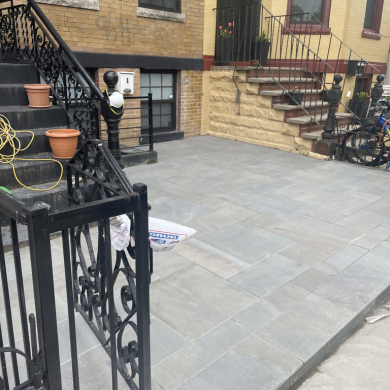
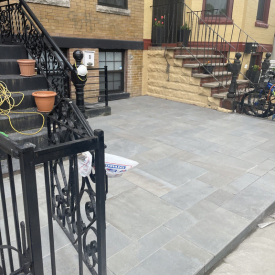
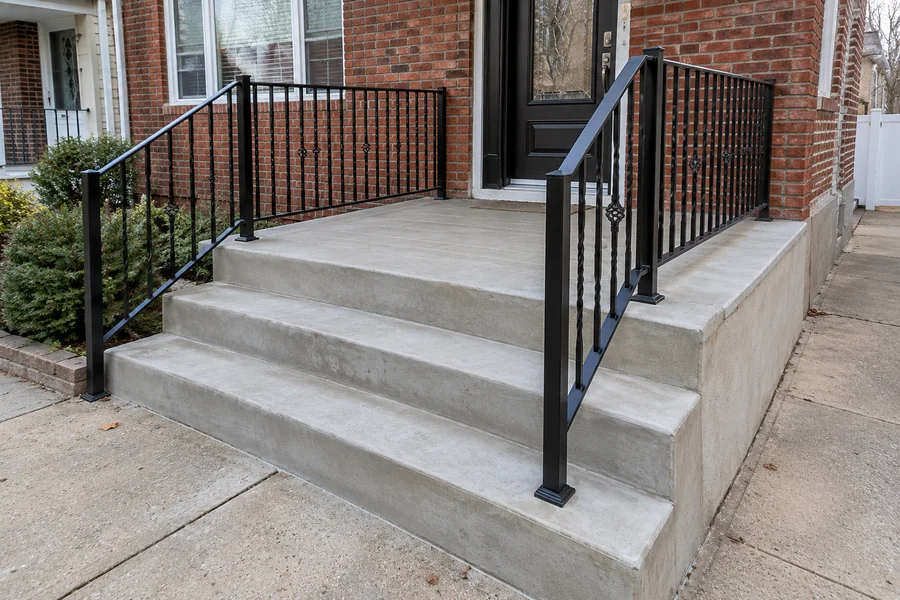
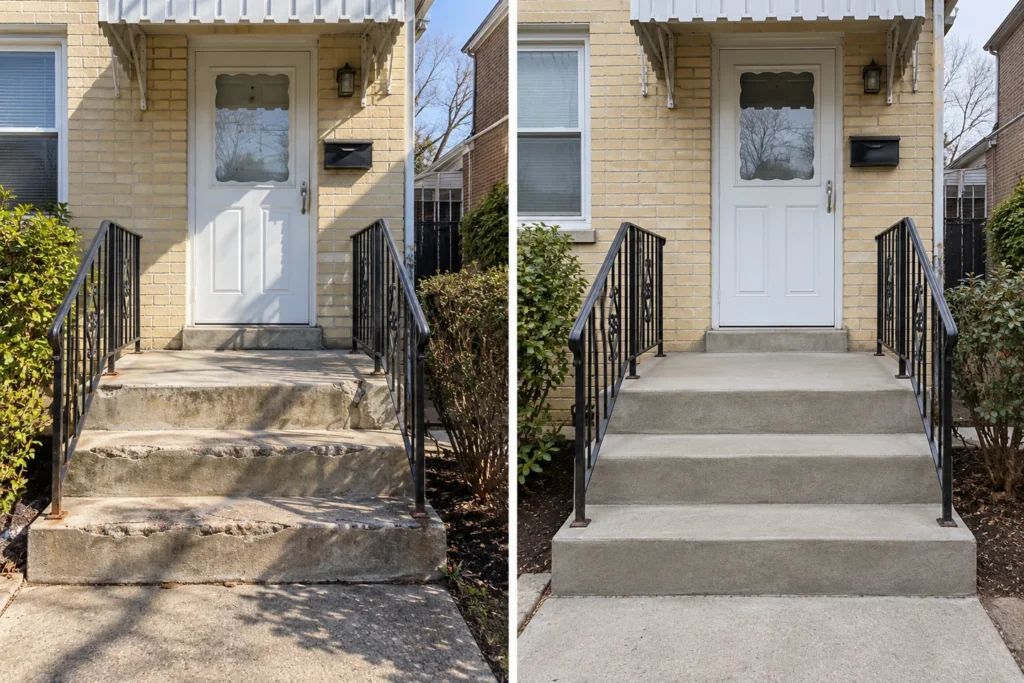
New York Pavers repairs masonry stoops and porch landings across all five NYC boroughs. We inspect loose steps, broken edges, and worn landings to determine whether a repair or rebuild makes sense.
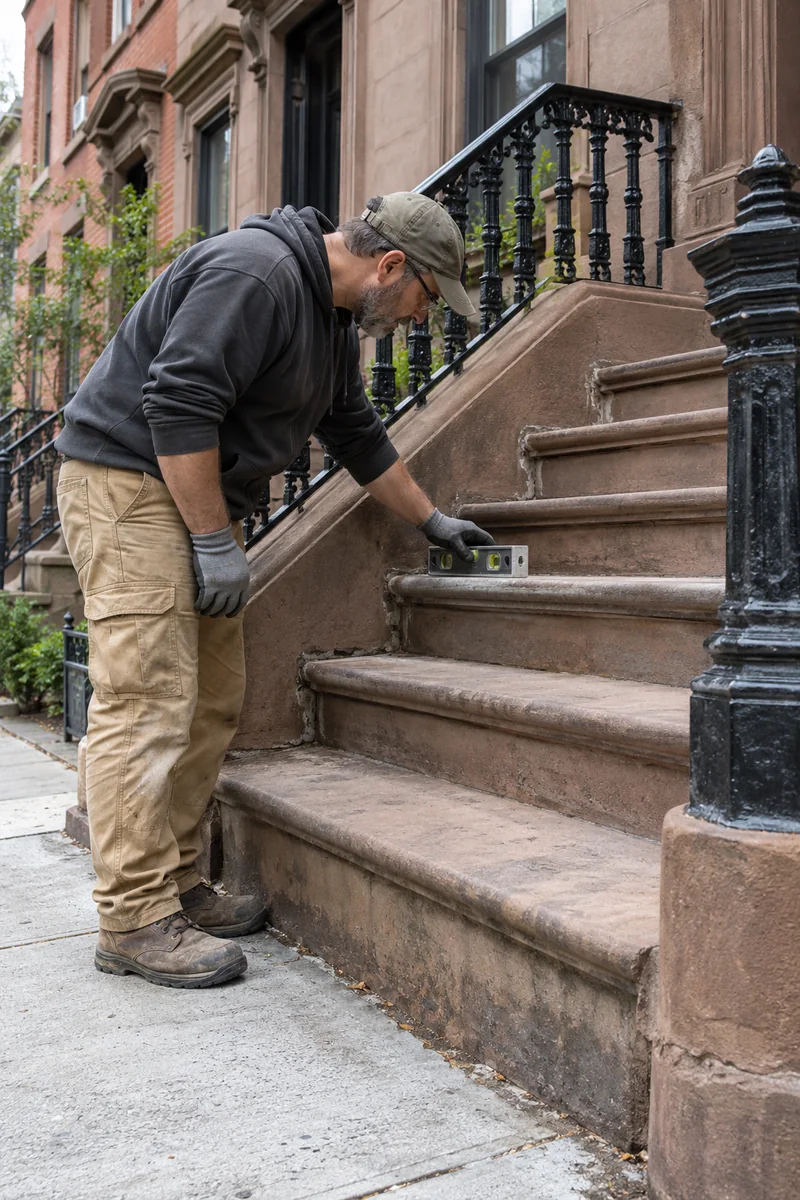
Stoop & Porch NYC
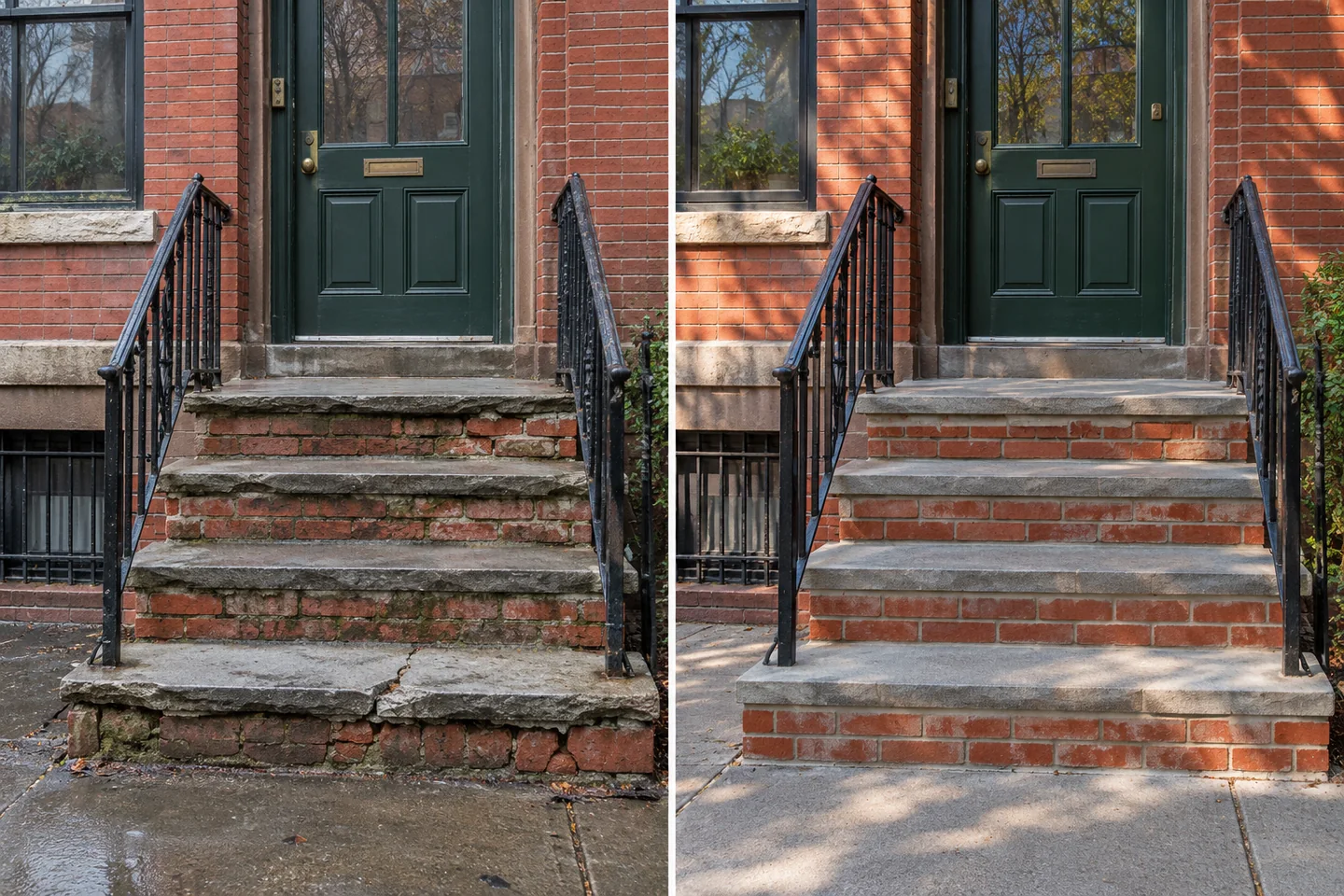
We look for loose treads, missing mortar, deteriorated concrete and visible movement. Separation from the building, recurring cracks or a sagging landing may call for further investigation before the repair can be specified.
Your entrance may be the main route for residents, deliveries and visitors. We discuss access, work-area protection and curing restrictions before starting. The estimate identifies the proposed repair area, materials and any related work that needs separate attention. For a brownstone entrance, see our guide to brownstone stoop restoration in Brooklyn.


 Trustindex verifies that the original source of the review is Google.
 Trustindex verifies that the original source of the review is Google.
 Trustindex verifies that the original source of the review is Google.
 Trustindex verifies that the original source of the review is Google.
 Trustindex verifies that the original source of the review is Google.
 Trustindex verifies that the original source of the review is Google.
 Trustindex verifies that the original source of the review is Google.
 Trustindex verifies that the original source of the review is Google.
 Trustindex verifies that the original source of the review is Google.


 Verified
 Verified
 Verified
 Verified
 Verified
 Verified
 Verified
 Verified Verified
 Verified
Call (718) 838-0982 or request a free estimate online. Share the property ZIP code, the material of the steps and the problem you have noticed. Mention loose rails, recurring cracks, leakage below the porch or any restrictions on access.
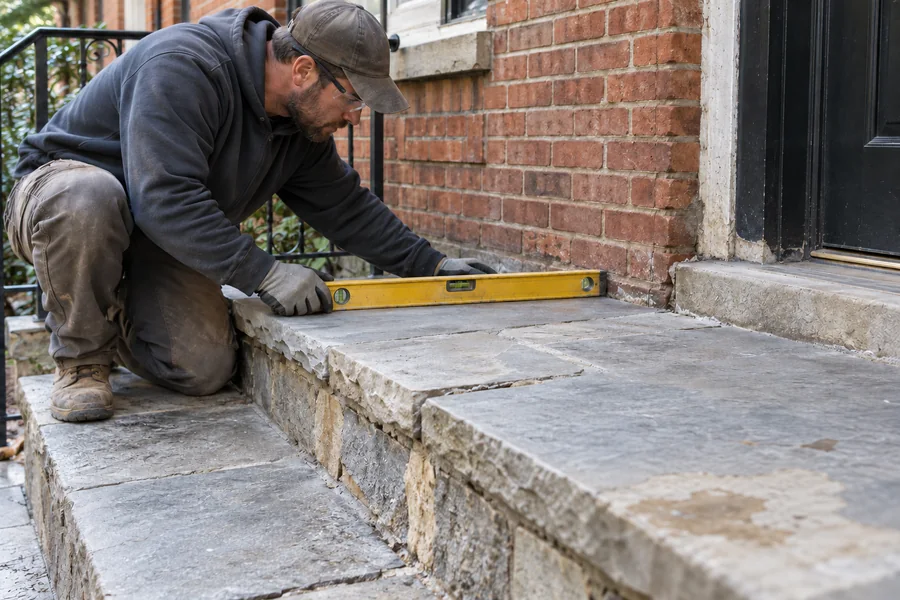
We review visible damage, tread support, joints and connections to the building. If the condition points to concealed or structural problems, further assessment is identified before the repair scope is finalized.
Review the proposed repairs, material choices, estimate and scheduling. We discuss applicable approvals, entrance access and any railing, waterproofing or other work that needs to be coordinated.
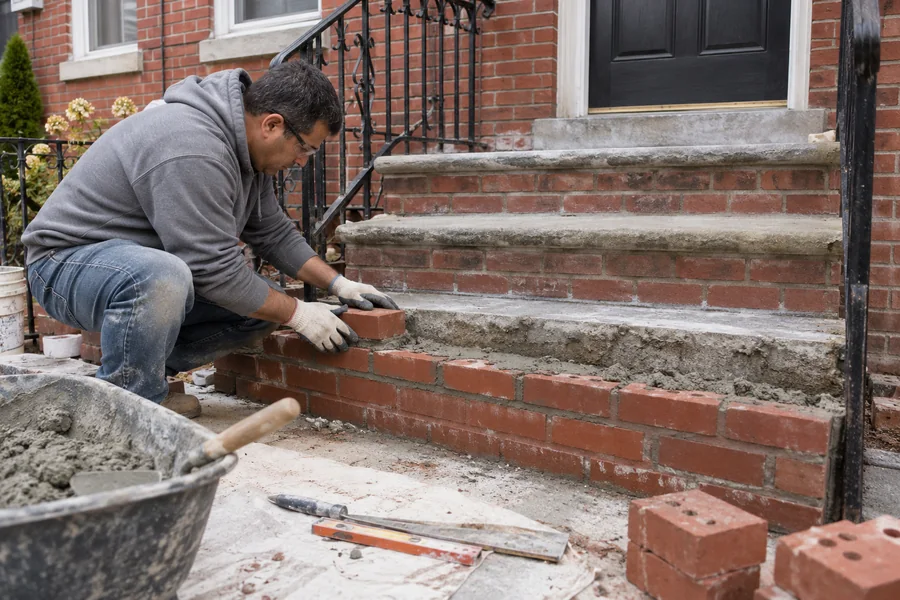
We complete the agreed masonry work and review the repaired areas with you. Care instructions and reopening guidance reflect the materials used and curing conditions; any required inspections or sign-offs are separate project requirements.
More than two decades of experience with natural stone installation, repair, resetting, patios, walkways, steps and exterior stonework across NYC properties.
Professional natural stone work backed by proper coverage, careful material selection and an experienced team focused on dependable installation and restoration.
We serve all five NYC boroughs. We check the steps, landing, and surrounding surfaces before recommending a repair.
Got questions? We’ve got answers.
The price depends on the damaged area, material, access and supporting construction. Resetting a few sound treads is a different scope from rebuilding masonry or investigating a leaking suspended landing. Railings, design work and approvals can also affect the estimate. NY Pavers provides a free on-site estimate for the proposed repair.
Requirements depend on the scope and property. Some ordinary repairs may not require a DOB permit, while structural work or changes to the entrance can require plans and permits. Landmark properties may also need Landmarks Preservation Commission approval. Confirm the applicable requirements before work begins; a DOB exemption does not automatically remove other approval requirements. Read NYC DOB permit guidance.
The material, profile, finish and appearance of the repair may need LPC review. Tell us if the building is an individual landmark or within a historic district before selecting replacement stone, mortar or a coating. Brownstone and other older masonry require a compatible approach; covering the original surface is not automatically the right solution. See the LPC permit guide.
Only if the repair addresses the actual source. Water can enter through open joints, a threshold detail, flashing or a failed waterproofing layer. A new surface alone may leave a concealed problem unresolved. Let us know whether there is a basement, storage space or occupied room beneath the landing so the investigation and repair scope account for it.
That depends on their condition, attachments and the work needed below them. Some railings can remain; others may need temporary removal and proper reinstatement or separate repair. Tell us if a rail moves or its base is corroded. Do not rely on a loose rail for support, and include its condition in the assessment before masonry work begins.
Duration depends on demolition, materials, repair complexity, approvals and weather. Some stages require the steps or landing to remain unused while materials cure. We discuss access arrangements and confirm return-to-use guidance for the work. If this is your only entrance, raise that at the first assessment so access can be planned before construction.
Tell us about your concrete, brick, or stone entrance. Include your ZIP code and describe any damage, loose steps, standing water, or access concerns.