Patio Builders in Brooklyn work in a completely different environment than contractors in typical suburban neighborhoods. In Brooklyn, limited backyard space, narrow access points, drainage issues, and dense surrounding structures all affect how a patio should be designed and built. If you are comparing Patio Builders in Brooklyn, it helps to look beyond surface-level design and focus on how each builder handles layout, materials, water management, and long-term durability. This guide explains what to know before hiring Patio Builders in Brooklyn for a small backyard project.
Here is the all-guns-blazing guide to finding a patio builder who can turn your tiny patch of Brooklyn dirt into a high-performance sanctuary.
1. The “Brooklyn Scale”: Why Standard Designs Fail Here
Most patio builders are used to suburban backyards where they can just dump a load of stone and sprawl out. In Brooklyn, we have logistics that would make a general cry. When people compare patio builders in Brooklyn, the difference usually shows up in the details no one notices on day one. The layout may look good at first, but if the drainage is off or the base is rushed, problems show up fast.
- The Narrow Access: If your builder hasn’t navigated a wheelbarrow through a 30-inch brownstone hallway or craned materials over a four-story roof, they aren’t ready for Brooklyn.
- The Micro-Climate: Between the high walls and the urban heat, Brooklyn backyards can be stagnant and damp. Your builder needs to understand drainage and airflow, otherwise, your expensive new patio will be an algae-covered pond by July.
2. Vertical Thinking: The Secret to Small Spaces
When you run out of floor space, you look at the walls. A great Brooklyn patio builder won’t just talk about pavers; they’ll talk about verticality.
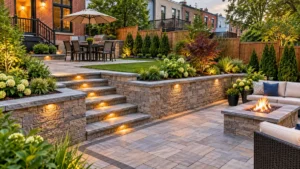
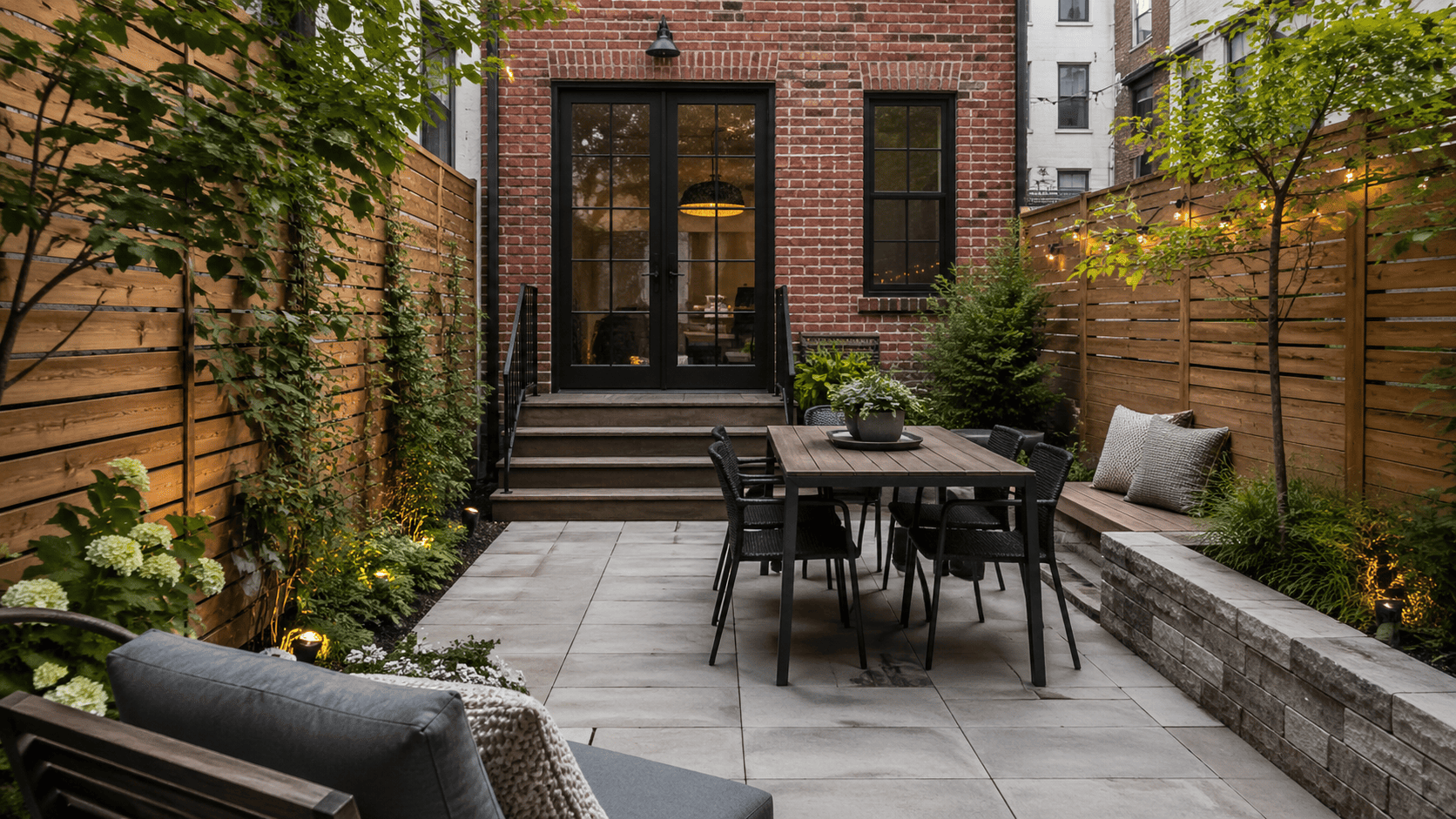
- Built-in Seating: Why waste space with bulky, movable chairs? Perimeter “knee walls” made of matching stone serve as structural retainers and permanent seating.
- Tiered Pavers: Even a 4-inch change in elevation can trick the eye into thinking a small space is actually two separate “rooms”, a dining area and a lounging area.
- Integrated Lighting: In a small yard, shadows are everything. Low-voltage LED lighting tucked under paver lips or into fences makes a tiny yard feel expansive and high-end the moment the sun goes down.
3. Material Choice: Quality Over Quantity
In a 2,000-square-foot suburban yard, you might choose cheaper materials to stay on budget. In a 200-square-foot Brooklyn yard, you can afford the “good stuff.”
- Porcelain Pavers: These are the new kings of Brooklyn. They are thin, incredibly durable, and, most importantly, they don’t absorb water. That means no salt damage and no moss growth in those shaded corners.
- Permeable Systems: NYC’s “Green Infrastructure” rules are getting stricter. A builder who suggests a permeable paver system isn’t just being trendy, they’re saving you from future drainage fines and basement floods.
4. The Drainage Obsession (It’s Not Optional)
In a small, walled-in yard, there is nowhere for water to go. If your builder doesn’t start the conversation with “Where does the water go when it pours?” fire them.
A professional Brooklyn builder will install:
- Linear Channel Drains: Discreet metal grates that catch runoff before it hits your back door.
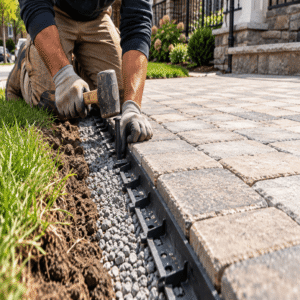
- Sub-Surface Pitch: Every inch of that patio needs to be pitched with surgical precision. Even a slight dip will create a mosquito-breeding puddle that never evaporates in the shade.
5. Logistics: The “Hallway” Factor
Before you sign a contract, ask the builder: “How are you getting the old dirt out and the new stone in?”
If they plan on dragging 10 tons of gravel through your living room without a specialized protection plan, walk away. Expert Brooklyn builders use high-density floor protection, debris bags, and sometimes specialized mini-equipment designed to fit through a standard door frame.
The Bottom Line
A small Brooklyn backyard shouldn’t feel like a cage; it should feel like a secret.
The right builder doesn’t see a “small” project, they see a precision project. They understand that every square inch of stone has to be perfect because you’re going to be looking at it from three feet away, not thirty.
Tired of staring at a cracked concrete slab and a pile of weeds? Let’s talk about a design that maximizes every inch of your Brooklyn footprint. From high-tech drainage to vertical masonry, we build sanctuaries where others just see “shoeboxes.”