Choosing between the best NYC driveway options isn’t just about curb appeal. In New York City, your driveway faces heavy traffic, snowplows, road salt, and brutal freeze-thaw cycles every year. The most common NYC driveway options—asphalt, concrete, and pavers, all perform differently under these conditions. Choosing the right material can mean the difference between a driveway that lasts decades and one that cracks after just a few winters.
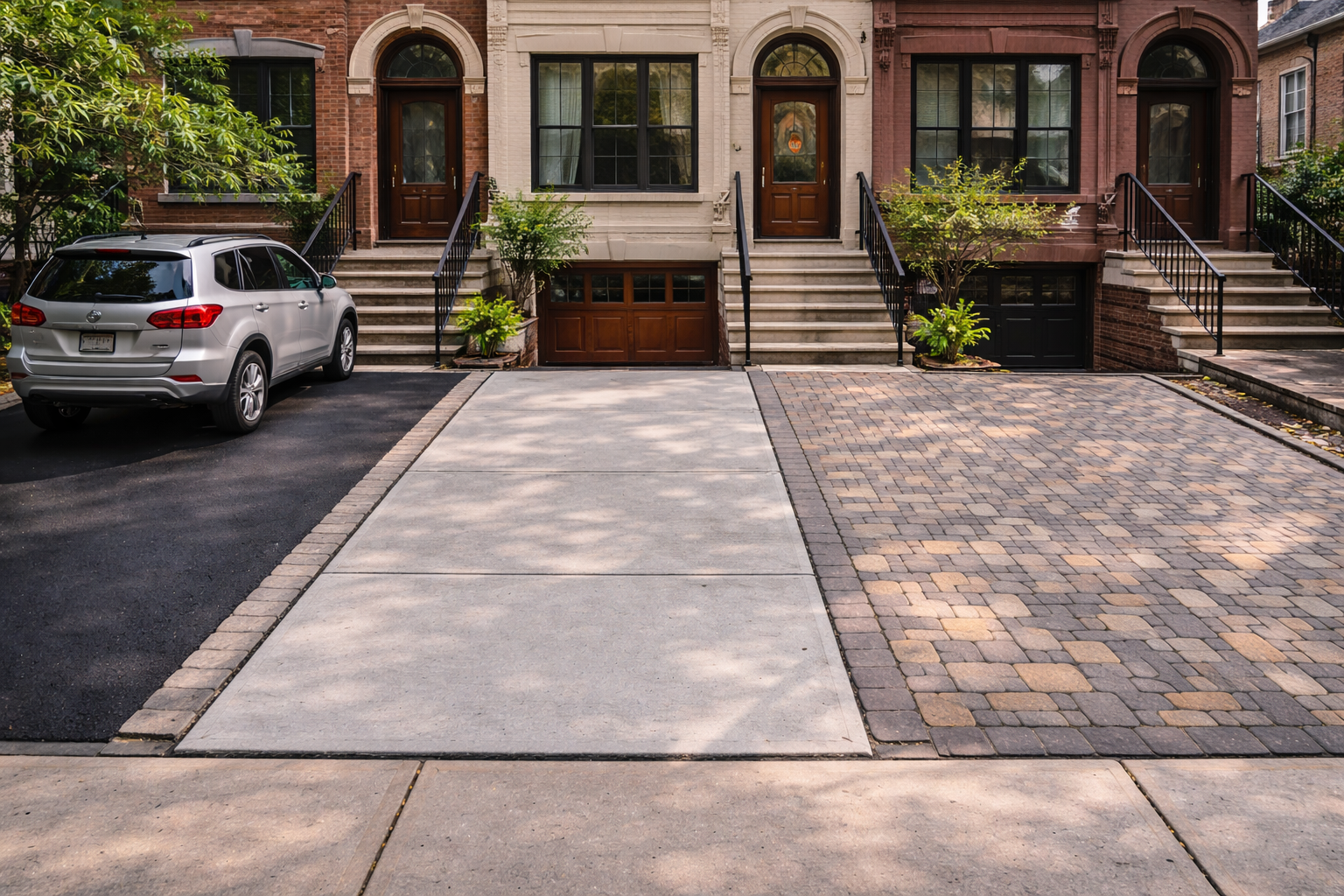
The three heavyweights in NYC are asphalt, concrete, and paving stones (pavers). Each one handles the urban grind differently. Here is the lightning-bolt truth about which material will actually survive the city’s demands and which one will fold under the pressure.
Asphalt Driveways: The Fast-Paced Urban Standard
Asphalt is the “New York Minute” of driveways. It is fast to install and relatively cheap, which makes it the go-to for many homeowners looking for a quick fix.
The real secret weapon of asphalt is its flexibility. Because it is a petroleum-based product, it doesn’t fight the temperature; it moves with it. During a brutal NYC winter, asphalt expands and contracts without immediately snapping. However, that “flexibility” comes at a price. The sun’s UV rays and leaked oil from your car act like a solvent, breaking down the bitumen bonds. If you don’t sealcoat it every few years, your “affordable” driveway will turn into a brittle, grey wasteland of potholes and cracks.
Concrete Driveways: The Heavy-Duty Powerhouse
If you want a driveway that feels like a permanent part of the city’s infrastructure, you go with concrete. It is the gold standard for strength and longevity.
Concrete gives you a clean, bright aesthetic that makes a property look modern and well-kept. It also stays significantly cooler than blacktop during those 95°F July days. But here is the catch: concrete is rigid. It hates the “inhale-exhale” movement of shifting city soil. If the base isn’t engineered perfectly or if moisture sneaks into the pores and freezes, the concrete will crack. And unlike asphalt, you can’t just “patch” a concrete crack without it looking like a permanent scar.
Paver Driveways: The Elite Performance Choice
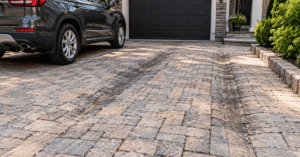
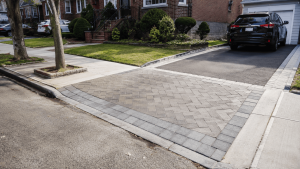
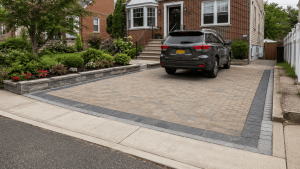
Paver driveways are the “all-guns-blazing” option for homeowners who refuse to compromise. Instead of one giant, rigid slab, you are building a surface out of thousands of interlocking units.
This design is pure genius for the NYC climate. Because the joints between pavers are flexible, the entire surface can “breathe” and shift during a deep freeze without a single stone cracking. If a delivery truck leaks oil or a stone somehow breaks, you don’t tear up the driveway; you just pop out that one stone and drop in a new one. It is the ultimate “fix-as-you-go” system that looks better with every passing year. The only hurdle? The upfront cost is higher because the labor involved in hand-setting a paver patterns is an art form.
Which Material Beats the NYC Weather?
New York weather is a material-killer. Asphalt handles the cold well but can soften and “track” into your house during a heatwave. Concrete stands up to the heat like a champ but lives in constant fear of the winter freeze-thaw cycle. Pavers are the versatile middle ground; they handle the thermal expansion of summer and the heaving of winter because their interlocking structure acts like a shock absorber for the entire property. Many homeowners prefer pavers because they are the most flexible NYC driveway options for harsh winter climates.
The Financial Reality: Price vs. Longevity
You get what you pay for. Asphalt is the budget-friendly entry point, but you’ll be paying for sealcoating and resurfacing for the rest of its life. Concrete is a mid-tier investment that lasts decades if you keep the water out. Pavers are a high-end investment that pays you back in zero “total-replacement” costs and massive curb appeal when it’s time to sell. In the NYC real estate market, a premium paver driveway is often the difference between a “sold” sign and a “price reduced” sign. Among all NYC driveway options, asphalt is usually the most affordable choice.
Why Professional Installation Is Non-Negotiable
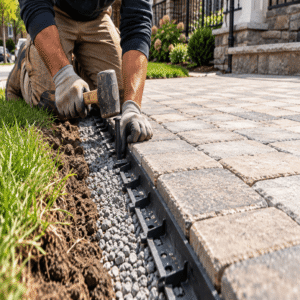
You can buy the most expensive pavers on earth, but if your contractor cheats on the sub-base, your driveway will be a wavy, sinking mess within two years. In the city, you are dealing with “disturbed” soil and ancient utility lines. You need a pro who understands soil compaction, pitch, and drainage. If the water doesn’t move away from the house, the material doesn’t matter, the ground will eventually swallow your investment.
The Bottom Line: Don’t Just Build, Outlast
Your driveway is the “welcome mat” to your home. It should be a statement of durability, not a constant maintenance headache. Whether you choose the flexibility of asphalt, the brute strength of concrete, or the sophisticated resilience of pavers, make sure you are building for the long haul.