The hidden costs of skipping routine exterior care are far greater than most property owners realize. Let’s stop calling it “skipping maintenance” and start calling it what it actually is: taking out a high-interest loan against your building’s future. In property ownership, there is no such thing as a “saved” dollar when it comes to the exterior.
Every time you ignore peeling paint or a clogged gutter, you’re deferring a bill that will return with interest.
Moisture Intrusion: The Structural Bank-Breaker
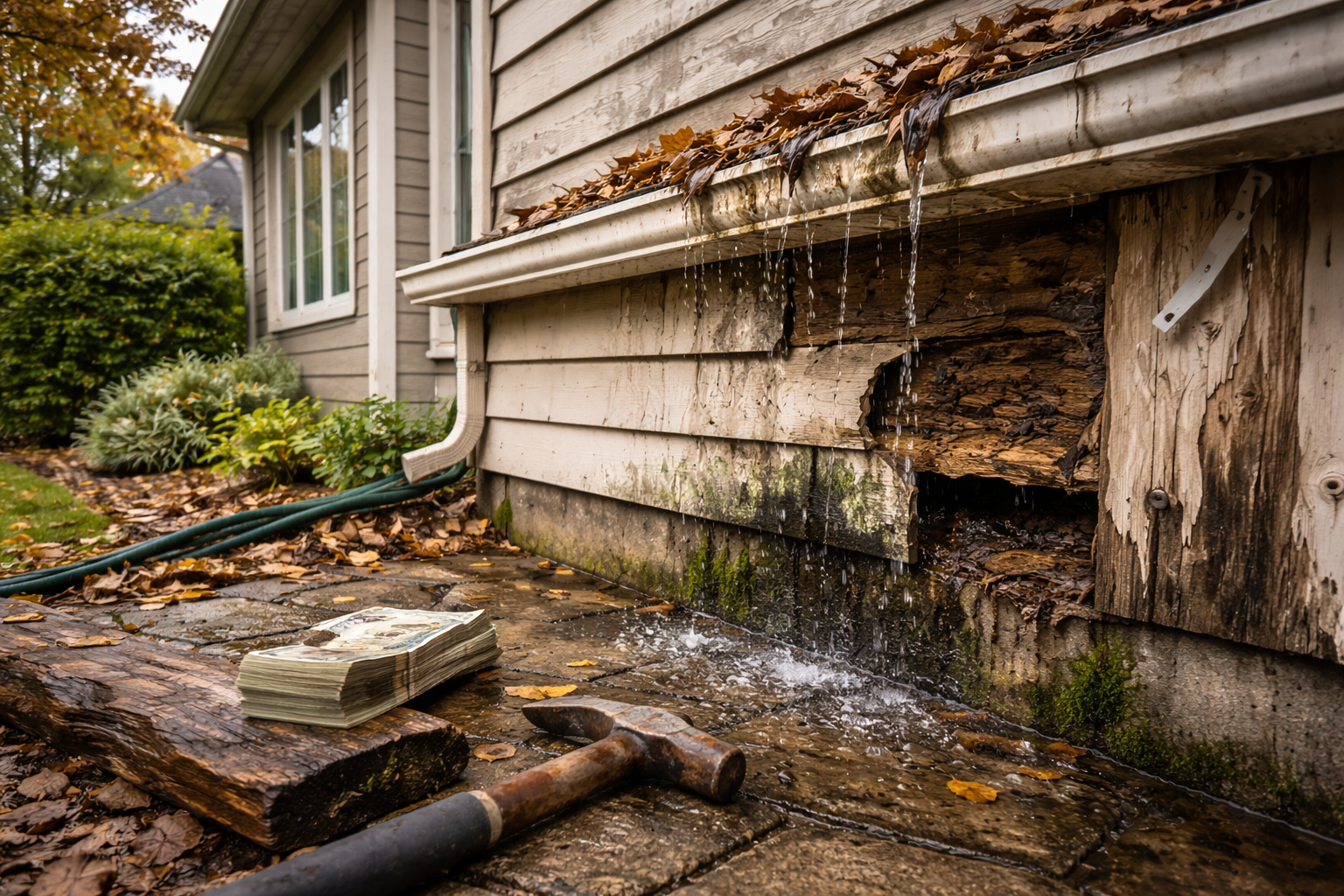
Water is the ultimate opportunist. It doesn’t need a massive hole to ruin your life; it just needs a failed bead of caulk or a hairline crack. Once moisture gets past your exterior skin, it enters a silent, destructive “stealth mode.”
It rots your wooden framing, dissolves the binders in your masonry, and turns your insulation into a soggy, useless mess. By the time you actually see the damage on the inside, you aren’t looking at a “sealing job” anymore; you’re looking at a full-scale structural intervention.
Minor Surface Defects are Warning Shots
That peeling paint or crumbling mortar joint isn’t just an eyesore; it’s a red alert. Exterior finishes are engineered to be the first line of defense against UV rays and acid rain. When the finish fails, the material underneath, whether it’s wood, stucco, or brick, is now completely naked to the elements.
The cost to scrape and repaint a wall is a fraction of the cost of replacing the actual siding or repointing an entire façade. If you ignore the surface, you lose the structure.
The Invisible Drain on Your Monthly Budget
Neglect isn’t just a future problem; it’s an expensive daily reality. When your building envelope starts to fail, it leaks air like a sieve. Gaps around windows, deteriorating seals, and compromised insulation force your HVAC system to go into overdrive just to keep the interior livable.
If your utility bills are creeping up, you aren’t just paying for power; you’re paying for the holes in your house. Routine care keeps the air, and your money, where it belongs.
Accelerated Material Aging: The Fast Track to Failure
Everything dies eventually, but neglect puts your building on the fast track to the scrapyard. Metal doesn’t just rust; it loses its structural capacity. Concrete doesn’t just “flake”; it spalls and exposes the rebar to corrosion.
Without routine inspections and cleaning, materials age in “dog years.” You’ll end up replacing a roof or a façade in fifteen years that should have lasted fifty. Premature replacement is the single biggest “hidden cost” in the industry.
The “Neglect Penalty” in Property Value
Appraisers and buyers are trained to look for “deferred maintenance.” Even if the interior is beautiful, a crumbling exterior signals that the building has been ignored.
Visible neglect creates a psychological “red flag” that triggers lower offers and massive repair credits during the sale process. You might save five thousand dollars on maintenance over five years, but you’ll lose fifty thousand on the sale price when the buyer sees the toll the city has taken on your walls.
Liability: The Risk You Can’t Afford
A building that isn’t maintained is a building that is dangerous. Loose masonry, rotting railings, and uneven walkways are lawsuits waiting to happen. In an urban environment, you are responsible for the safety of everyone on that sidewalk. A proactive inspection catches a loose cornice before it becomes a headline. Safety is the ultimate form of cost-control.
The Compounding Effect of Failure
Exterior systems are a domino set. A clogged gutter leads to an ice dam. The ice dam forces water under the shingles. The water rots the roof deck. The rot spreads to the rafters.
When you ignore one small “habitual” maintenance task, you are setting off a chain reaction. Every system you let fail puts more stress on the ones that are still standing. By the time you decide to act, you aren’t fixing one thing; you’re fixing everything.
Conclusion
Routine care is the only way to win the war against the elements. It preserves your materials, slashes your energy bills, and keeps your property value where it belongs. In the city, the weather and the environment are always attacking. If you aren’t actively defending your building, you are paying for its surrender. Understanding the hidden costs of skipping routine exterior care is the first step toward protecting your building, your budget, and your long-term property value.
Are you ready to stop the “bleed” and get ahead of the elements? Let’s build a maintenance shield that protects your building and your bottom line.