Poor drainage and exterior damage are directly connected, and ignoring that link can fast-track serious structural problems. Forget about the slow march of time. If you want to see a building fall apart in fast-forward, just ignore your drainage. Water is the most destructive force in construction, and when it has no clear exit strategy, it turns from a weather event into a demolition crew.
Here is the lightning-bolt truth about how poor drainage is actively sabotaging your building’s lifespan.
Standing Water Turns Your Building into a Sponge
When water pools against your exterior, it doesn’t just sit there. Porous materials like concrete, brick, and stucco have a “thirsty” nature. Through capillary action, they drink that standing water deep into their core. This constant saturation doesn’t just make things look wet; it dissolves the internal bonds that give the material its strength. A saturated wall is a dying wall, losing its structural integrity long before you see the first crack.
Pressure Forces Water into Every Tiny Gap
Water is an opportunist. When drainage fails and water builds up, it creates “hydrostatic pressure”, essentially a weight of water pushing against your house. This pressure forces moisture into microscopic seams, joints, and hairline cracks that would otherwise stay dry. You aren’t just dealing with a leak; you’re dealing with a forced entry. Once those pathways are established, the water has a permanent highway into the heart of your structure.
The Foundation is Under Constant Siege
Your foundation depends on the soil around it staying relatively stable. Poor drainage ruins that stability. When the ground becomes a swamp, the soil expands and places immense pressure on your foundation walls. When it finally dries, it shrinks, leaving voids. This “inhale-exhale” cycle of the earth snaps foundation walls like dry twigs, leading to the kind of settlement issues that cost a fortune to fix.
Winter Becomes a Weapon of Destruction
In any climate where the temperature drops, poor drainage turns your house into a target. Because your walls and walkways are constantly wet from bad runoff, the “freeze-thaw” cycle is ten times more violent. That trapped water freezes, expands by 9%, and acts like a hydraulic wedge inside your materials. If your drainage was working, the materials would be dry and the frost would have nothing to use against you.
Your Expensive Finishes are Being Pushed Off
Most people blame “bad paint” when they see peeling or bubbling. Usually, the paint is fine, the drainage is the villain. When moisture is trapped in the substrate because of poor water management, it tries to escape by pushing outward. This vapor pressure literally delaminates your coatings, blowing the paint and sealants right off the surface. You can repaint every year, but until you fix the drainage, you’re just throwing money into a puddle.
Biological Growth Turns Your Home into a Buffet
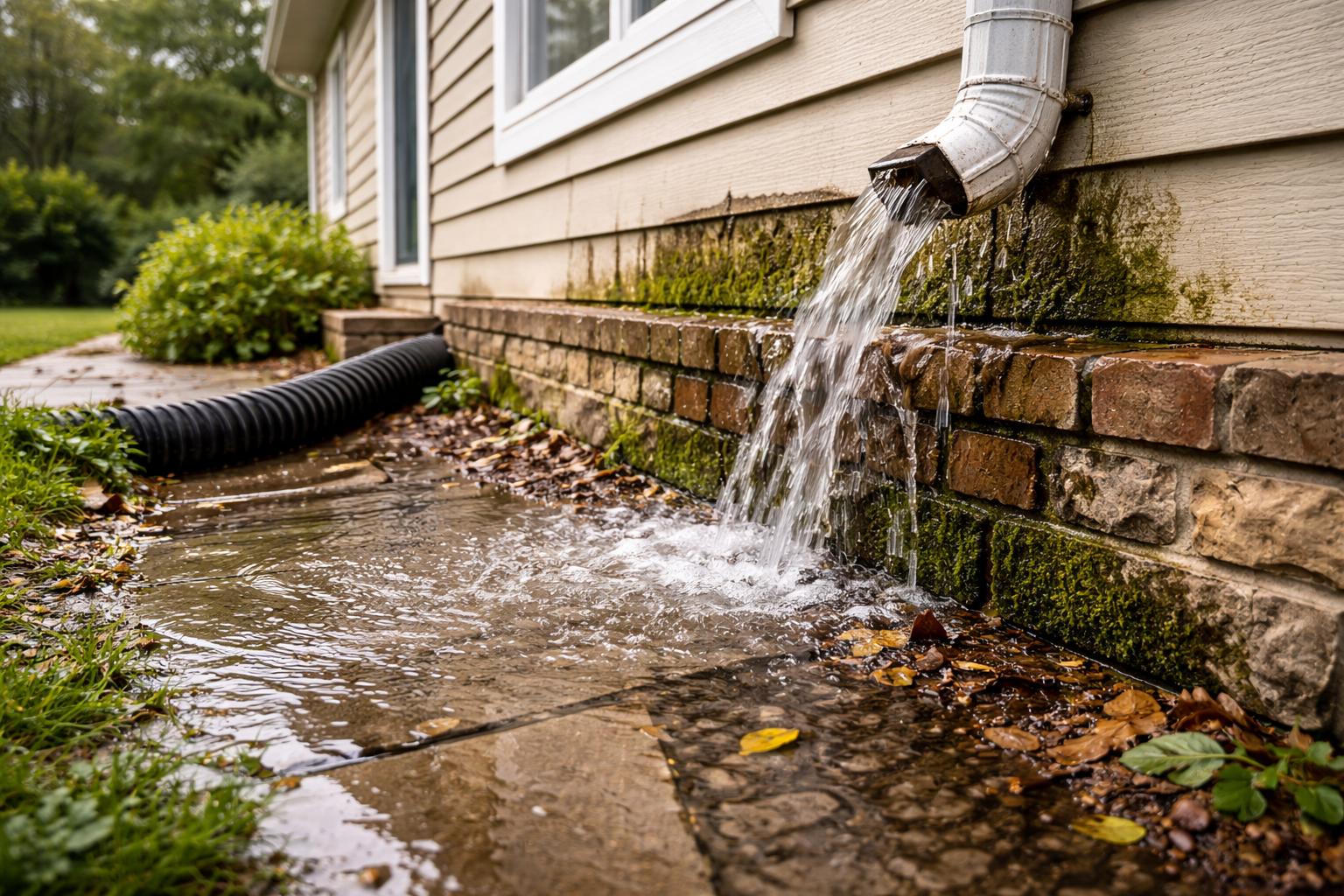
Mold, algae, and mildew aren’t just ugly; they are living organisms that thrive on the dampness created by bad drainage. These growths act like a wet blanket, trapping even more moisture against your exterior and secreting acids that eat away at surface layers. If you see green or black streaks on your walls, your drainage has failed, and the local ecosystem is moving in to digest your siding.
The “Domino Effect” of Water Damage
Water rarely stays in one place. A drainage failure at the roofline rots the fascia, which then allows water to run behind the siding, which then rots the wall studs, which then settles in the foundation. It is a catastrophic chain reaction. A localized drainage problem today is a total building failure tomorrow.
Conclusion
Poor drainage is the ultimate catalyst for exterior ruin. It takes every natural threat, frost, pressure, and rot, and turns the volume up to maximum. You can invest in the best materials on earth, but if you don’t move the water away from them, they will fail. Managing your drainage isn’t just “maintenance”; it is the single most important thing you can do to keep your building standing.
Are you seeing “tide marks” on your foundation or gutters that overflow during a light rain? Let’s figure out a drainage strategy that moves the water out before it moves in.