There are bumps, bruises and tears in winter in New York. However, the damage to property doesn’t just come from cold, it comes from the up and down.
In Queens and Brooklyn, there are frequent temperature swings above and below freezing level in a single week during the winter. That constant cycling is known as the freeze-thaw, and it’s a major reason for cracked driveways, falling patios, breaking pavers and crumbling concrete throughout NYC.
By knowing what it does and how it works, you will be able to identify any damage before it happens and choose materials that will fit the job better, which will save you money in the long run.
How Soil Changes During a Freeze-Thaw Cycle
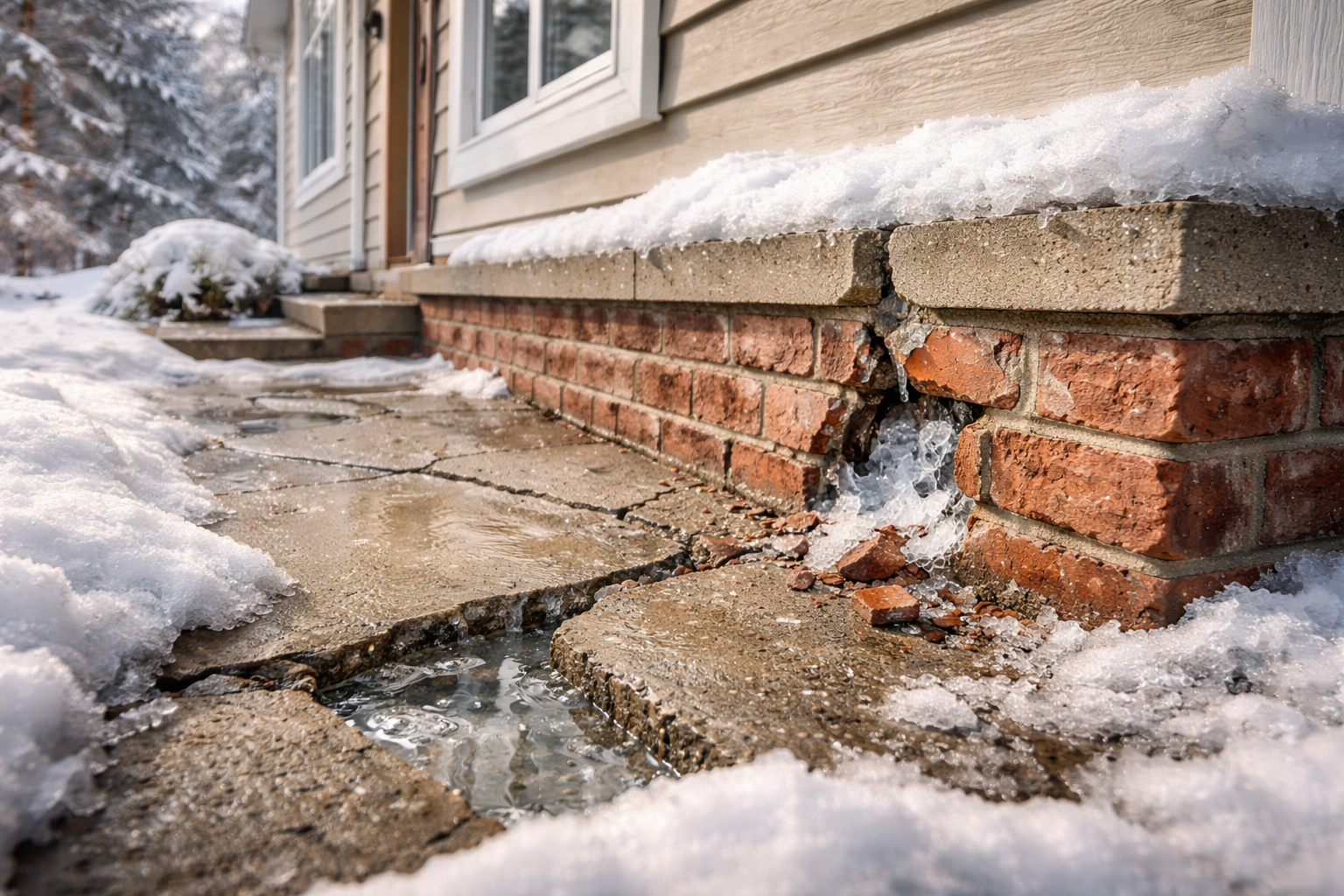
Water expands by about 9 percent when it freezes. That sounds small. That pressure is huge when it happens in a small area, such as a crack in your concrete or the pore structure of a paver.
The Freeze-Thaw Process
Here’s the sequence:
Water from the rain or snowmelt penetrates through the small cracks or pores of the driveway, patio or walkway surface.
Overnight frost occurs with temperatures below freezing. That water swells and presses against the material around it.
The next day, temperatures rise again. The ice turns to liquid and shrinks. The crack has now widened a little bit.
This occurs again and again during a New York winter. In each cycle, the split is enlarged a bit. In the spring, a crack has grown into a crack. After the next winter, you’ve got a structural problem.
This process applies to all exterior concrete surfaces including poured concrete, brick, concrete pavers and natural stone. There are no 100% resistant materials. However, some perform much better than others.
Which Surfaces Are Most Vulnerable?
Poured Concrete
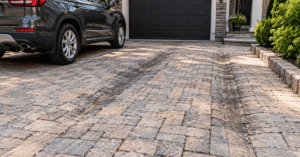
Poured concrete is especially vulnerable. A hard flat sheet that will not bend. If water enters a crack and begins to cycle, it can cause a lot of damage in a short amount of time, and repairs are easily visible. A poor water-to-cement ratio (typical of cheap installations) attracts more water and breaks down more rapidly.
Brick and Mortar
The weak point of brick and mortar is the mortar joints. Mortar is porous and absorbs water. The mortar cracks and breaks and bricks start to loosen or shift after repeated freeze-thaw cycles. That is why Brooklyn row houses should be repainted every 25 to 30 years.
Natural Stone
Natural stone such as bluestone can spall (the outer layer of stone chips off) if water is repeatedly trapped in it and freezes. Thinner cuts are more susceptible than thicker cuts.
Concrete Pavers
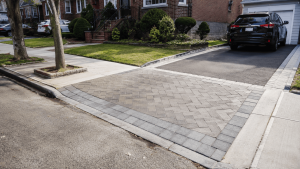
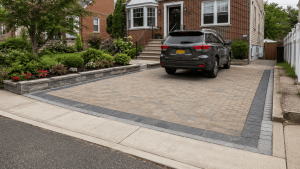
Unlike poured slabs, concrete pavers are more resistant to freeze-thaw cycles because they are individual pieces with flexible joints between them. This allows movement to be absorbed rather than transferred directly through one rigid surface.
Low-density paving materials that absorb high amounts of water still crack and spall eventually, though. The quality of the material is extremely important.
The Role of Base Preparation
Did you know that freeze-thaw damage can affect more than just the surface of your home? It can also begin from below.
When moisture accumulates under the surface of the driveway or patio because it was not installed over a compacted gravel base (or one that is too thin), freezing temperatures force the surface upward. This is referred to as frost heave.
What Frost Heave Causes:
- Pavers shifting out of place
- Cracking slabs
- Lifted edges and uneven surfaces
It’s very common on budget installations in NYC where contractors fail to excavate to proper depths in order to save time and money.
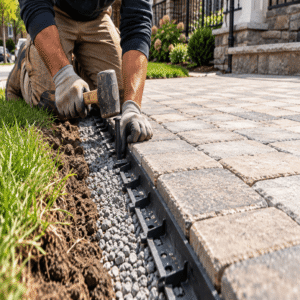
There should be a minimum of 6 inches of compacted gravel beneath patios or driveways in New York, sometimes more depending on soil conditions. This base allows water to drain away instead of pooling underneath and freezing.
This is one of the largest differences between a cheap installation and a professional installation. The base cannot be seen after the project is completed, but the results become obvious after the first severe winter.
Look for Indicators of Freeze-Thaw Damage
Check exterior surfaces in the spring after the final frost. Look for:
- Cracks that did not exist the previous year
- Cracks wider than simple hairline fractures
- Uneven or lifted pavers or concrete sections
- Surface breaking or spalling where the top layer flakes away
- Edges separating from borders or walls
- Pooling water in places that previously drained correctly
Catch problems early and most repairs remain simple and inexpensive. A $400 crack repair ignored for two winters can easily become a $4,000 resurfacing project.
How to Protect Your Property Going Forward
Seal Your Surfaces
A quality penetrating sealer can greatly reduce water absorption. Reapply every 2-3 years on concrete pavers and poured concrete. It won’t make a surface completely waterproof, but it significantly limits water penetration.
Repair Cracks Immediately
Do not wait until spring. Any water that enters an open crack during winter will continue expanding the damage. Even temporary filling materials can help until a permanent repair is completed.
Improve Drainage
If water is accumulating on or around your patio or driveway, it will eventually enter the base and cracks. Proper grading and directing gutters away from hard surfaces are essential.
Choose Better Materials
Select high-density pavers and materials with low water absorption rates from the beginning. They perform significantly better in NYC’s climate. Cheap materials almost always become more expensive over a 20-year timeline.
Why Professional Installation Matters
The best protection against freeze-thaw damage is having a surface installed correctly from day one.
Correct base depth, proper drainage slope, quality materials, and tightly installed joints that prevent water infiltration are all decisions made during installation. Once the project is complete, these problems cannot be corrected without tearing everything apart.
NY Pavers has been installing driveways, patios, walkways and outdoor surfaces throughout Queens, Brooklyn, Manhattan, and Long Island for more than 23 years.
What Sets Professional Installation Apart:
- Proper excavation
- Correct base preparation
- Drainage-focused installation
- Quality materials built for NYC winters
- Written quotes
- Free estimates
- No shortcuts