When you plan exterior projects on a small NYC lot, you’re not just renovating a yard—you’re solving a city-sized puzzle. In New York City, outdoor space is measured in inches, not acres, which means every decision matters. Between tight property lines, close neighbors, and strict city regulations, learning how to plan exterior projects on a small NYC lot requires a smarter, more intentional approach than suburban design ever will.
But here is the good news: a small lot isn’t a curse, it’s an opportunity to be incredibly intentional. When every square foot counts, you can afford to make every square foot perfect. You just have to plan for the reality of the city, not a suburban fantasy.
1. The “Power of One”: Choose Your Primary Mission
The biggest mistake NYC homeowners make? Trying to fit a suburban backyard into a Brooklyn nook. If you try to cram in a dining area, a lounge, a grill station, and a garden, you’ll end up with a space that feels like a storage unit.
The Strategy: Pick one “hero” function. Do you want to host dinner parties, or do you want a quiet place to read? By committing to one main goal, the space feels open and luxurious rather than cluttered and claustrophobic.
2. Know Thy Property Line (And the Law)
In NYC, property lines are practically sacred, and so are the building codes. Before you even look at a catalog, you need to know about setbacks, zoning, and whether you’re in a Landmark district.
The Reality Check: Do not skip the property survey. If you build a beautiful new fence or patio two inches over the line, your neighbor (or the city) will eventually make you tear it down. Get your permits in order early so your dream project doesn’t turn into a legal nightmare.
3. Scale is Your Best Friend, or Your Worst Enemy
In a small space, “bulky” is the enemy. That massive outdoor sectional might look great in the showroom, but in your yard, it will swallow the entire space and block the flow of traffic.
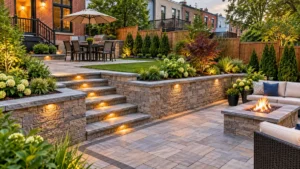
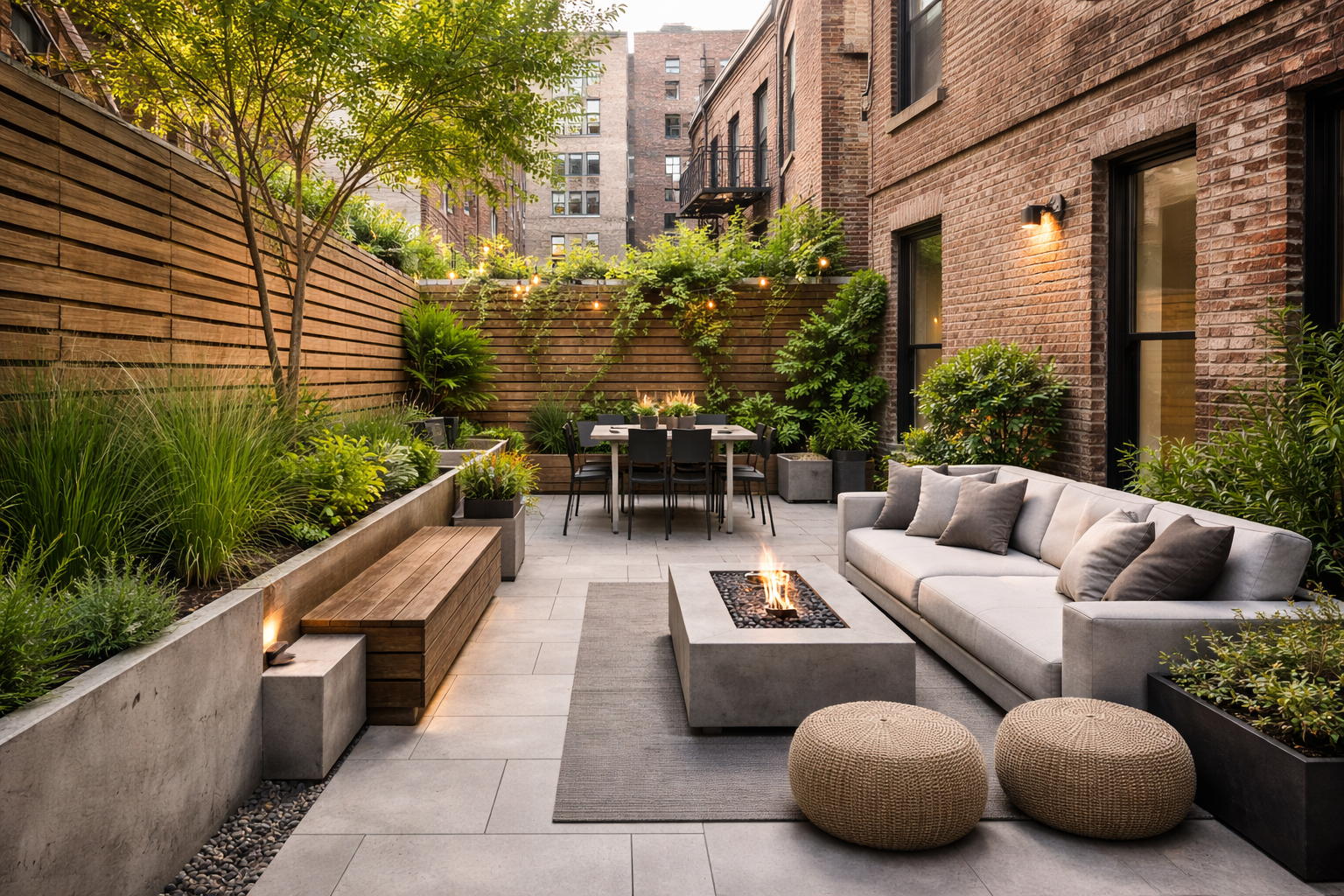
The Design Hack: Think “low profile” and “clean lines.” Use furniture and materials that feel light. A streamlined built-in bench along a wall takes up half the space of a row of chairs and provides double the seating. Keep the proportions balanced so the yard feels like a retreat, not a trap.
4. Drainage: The Non-Negotiable Foundation
In a cramped NYC lot, water has nowhere to go. If you don’t plan for drainage, you aren’t just ruining your new patio, you’re potentially flooding your own basement or your neighbor’s.
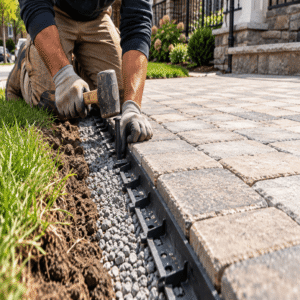
The Technical Must: Proper grading (sloping the ground away from the house) and permeable materials are the “holy grail” of urban Reno. Address where the water goes before you think about what color the pavers should be. If the foundation isn’t dry, nothing else matters.
5. Choose Materials That Can Handle the “City Grit”
NYC is tough on exteriors. You’ve got salt in the winter, intense heat in the summer, and a constant layer of urban dust and pollution. You need materials that don’t need a part-time job to maintain.
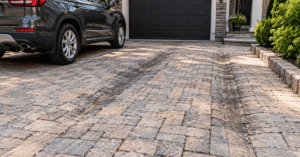
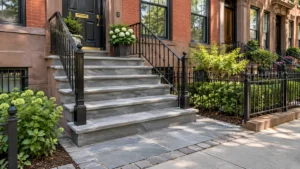
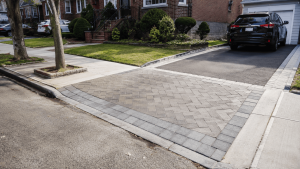
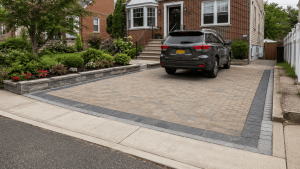
The Pro Choice: Natural stone, high-end pavers, and treated wood or composites are the winners here. You want surfaces that look better with age, or at the very least, surfaces that can be power-washed back to life in ten minutes.
6. Stop Looking Down, Start Looking Up
When you run out of floor space, the walls become your greatest asset. Vertical design is how you turn a “small lot” into a “private oasis.”
The Vertical Advantage: Use fences, trellises, or “living walls” to add greenery and style without eating up your precious floor square footage. Vertical elements also help “frame” the space, making it feel like an intentional outdoor room rather than just a patch of dirt behind the house.
7. The Logistics Nightmare: How Does it Get Back There?
This is the part most people forget: The Access. How is the contractor getting a pallet of stone or a bag of cement into your backyard? If the only way in is through your pristine living room and a 28-inch wide hallway, your project just got a lot more complicated (and expensive).
The Planning Tip: Talk to your contractor about staging and debris removal on day one. Knowing how the materials will move will dictate what materials you can actually use.
8. The Privacy vs. Light Tug-of-War
In NYC, “privacy” usually means “staring at your neighbor’s brick wall.” You want to feel secluded without feeling like you’re sitting at the bottom of a well.
The Balance: Use “semi-private” elements. Slatted fences or strategic plantings can block the neighbor’s view while still letting the afternoon sun filter through. It’s about creating a “screen,” not a “fortress.”
9. Don’t Hire a “Suburban” Contractor
Urban construction is its own beast. You need a team that understands the specific headaches of NYC, the tight lot lines, the shared walls, the permit process, and the “Tetris” of material delivery.
The Investment: Hire someone who has done this a hundred times in your specific borough. They’ll know the tricks for maximizing space and avoiding the common pitfalls that “general” contractors often miss.
Conclusion
Planning an exterior project on a small NYC lot is all about making smart, disciplined choices. The best way to plan exterior projects on a small NYC lot is to design for durability, scale, and long-term ease of maintenance. It’s about prioritizing what actually matters, drainage, proportion, and durability, so you can spend your time enjoying the space rather than fixing it. With the right plan, even the smallest backyard can become the most valuable “room” in your house.